You come out of the water, heart rate still climbing, goggles half off, and run into a transition area packed with hundreds of bikes that all look exactly the same. Somewhere in that sea of black carbon and matching wheels is yours — and every second you spend looking for it is a second off your time.
Practising your transition route can help you find your bike calmly. Combine a remembered rack position with a visible personal detail; neither replaces practice or the organiser’s instructions.
Why this is harder than it sounds
A busy transition area can make orientation difficult. Several rows of similar bicycles, other athletes and unfamiliar routes are good reasons to practise before the start.
The problem is straightforward: many race bikes share similar designs. Similar brands, colours and aero shapes can make individual bikes harder to distinguish while you are concentrating on the race.
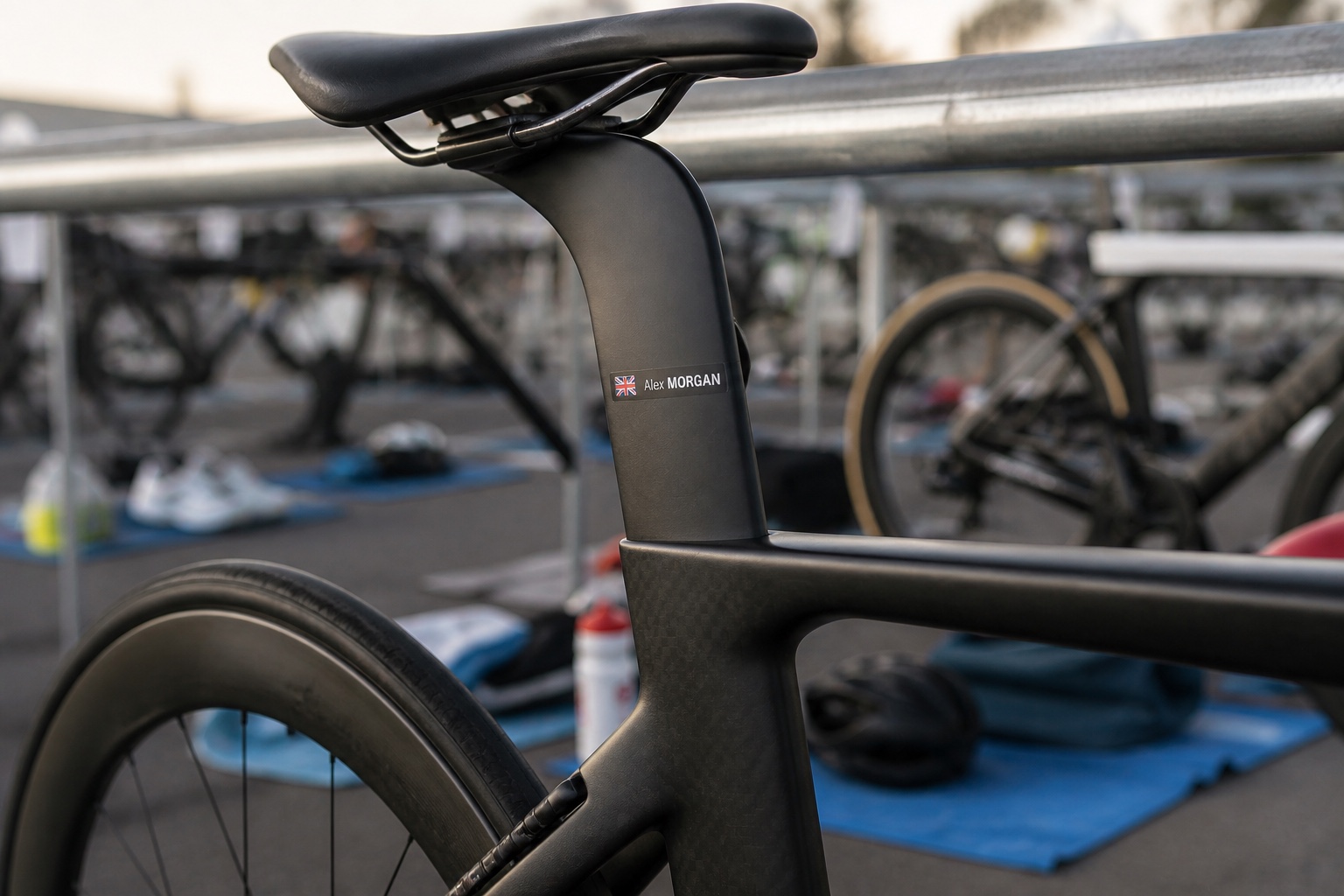
Make your bike easier to identify and give it a clean professional look.
The standard advice: count, memorize, repeat
These practical steps can help you prepare:
- Count your row, not just a landmark. Before the race, count how many racks you pass from the transition entrance to your spot — “third row, halfway down, right side.” Landmarks can move or get crowded with other gear; a number doesn’t.
- Walk it before you need it. Walk from the swim exit to your bike, then from your bike to the bike-out line, until the path feels automatic.
- Use a visual marker. Use only markers expressly permitted by your event. Do not attach objects to racks or leave items outside your allotted area without permission. Prioritise the official rack and race numbers.
- Rehearse race morning. Visualize the route from the swim exit to your bike at least once before you’re standing in the water.
These techniques work, but they all share the same weak point: they depend on you, mid-race, under stress, executing a plan correctly. Adrenaline doesn’t always cooperate.
A personal detail to complement your preparation
A personal visual detail can add another reference point to your remembered row number. It may help you recognise your bike when you reach the rack, but it is not a guarantee or a substitute for checking the official number.
A name-and-flag sticker on an appropriate visible part of the top tube can provide that extra detail. It is not medical identification or timing equipment. Choose a position you can see from the aisle and keep official event labels clear. A name and flag you recognise as yours may provide another cue; we do not claim a measured time saving or faster recognition than rack numbers.
It works even better paired with the basics:
- Put it where you’ll see it from the aisle, not just standing in front of the bike — top tube and seat post both work.
- Combine it with your remembered row and the official rack number; use additional markers only if the organiser permits them.
- A matching helmet sticker can help identify your equipment, only if the helmet manufacturer allows it. Keep vents, safety markings and official race labels unobstructed.
Why this matters beyond race day
Similar identification needs arise at gran fondo bike parking, club café stops and supervised bike storage. A name-and-flag sticker offers a personal reference point, but you still need to check the bike and keep track of where you left it.
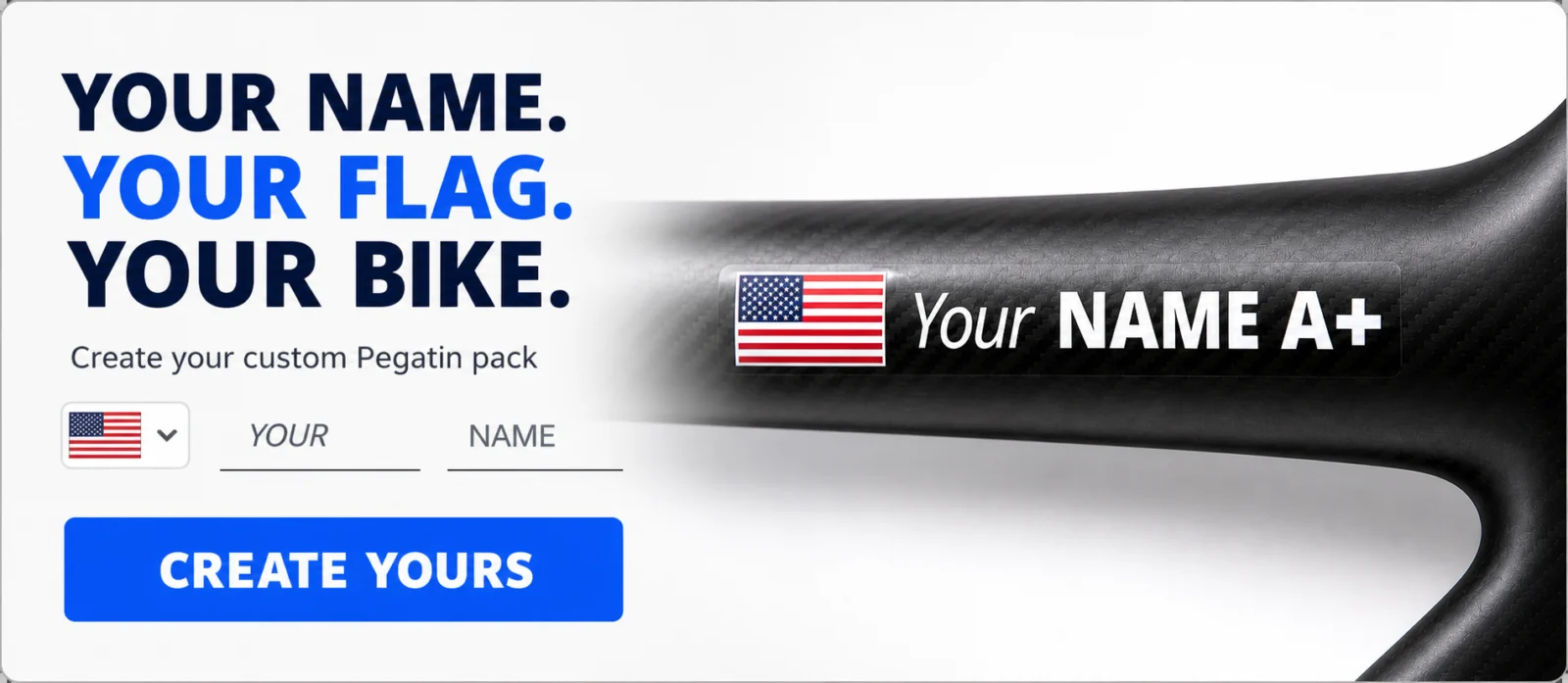
At Pegatin, our personalised name-and-flag stickers add a clear, durable visual detail for training and racing. They are not a safety device, tracking system or replacement for official identification.
Create your own name-and-flag stickers at Pegatin →
Frequently asked questions
Will a sticker survive an Ironman-distance race? Laminated vinyl decals are designed for outdoor use. Surface condition, correct application, cleaning and wear affect service life; inspect the sticker rather than assuming a guarantee for every race.
Where’s the best spot for visibility in transition? The top tube is the classic choice since it’s visible from the side as you run down the aisle. Many athletes add one to the helmet too, for a second point of confirmation.
Does color choice matter? Choose lettering that contrasts with the frame and a clearly readable name and flag. This provides a useful visual cue without a measured speed-of-recognition claim.
Is this useful for shorter races too, not just full-distance triathlon? It can provide a personal reference point at shorter races and group events too. Follow each organiser’s rules and rehearse the relevant transition route.
Related reading
Continue with our triathlon bike guides and race-day advice.
Complete your transition setup with our guide to name stickers for aero helmets.
Create your personalised bike name and flag stickers — use code PRODECALS for 15% off
Order well in advance: production and delivery take time. Check the current estimate for your destination.