Many cyclists add their name to a bike or helmet for a personal, professional look. There is also a practical reason: a visible name can help people associate equipment with its owner.
It is worth thinking about identification before a ride. A decorative name sticker is not safety equipment, proof of identity or a medical identification device, and it does not guarantee faster help.
Identification is not the first emergency priority
In a serious emergency, the priority is to contact the local emergency service and follow its instructions. Checking consciousness and breathing takes priority over finding a name. A visible name may provide an additional clue, but responders cannot assume that equipment belongs to the injured person or rely on a sticker for medical decisions.
A name sticker does not replace an emergency call, official identification, an emergency contact or medical information. Do not delay urgent help to search for a name on a bike or helmet.
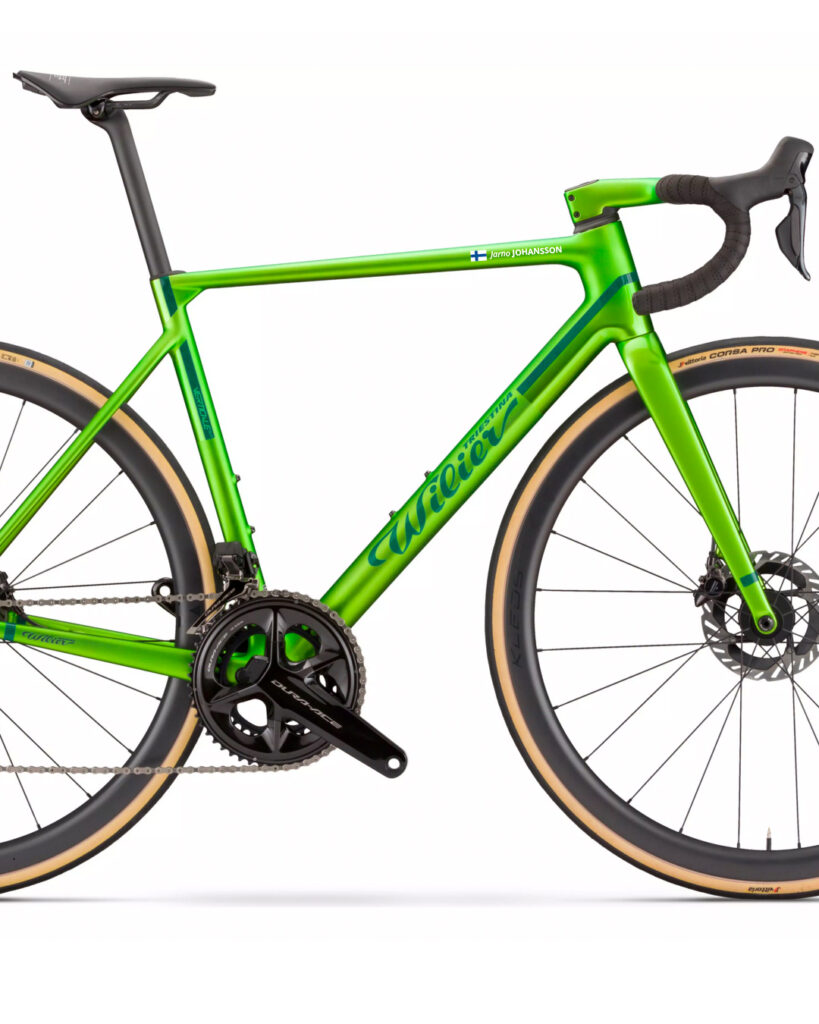
Create your personalised bike name and flag stickers — use code PRODECALS for 15% off
Give your helmet a clear racing identity with your name and flag.
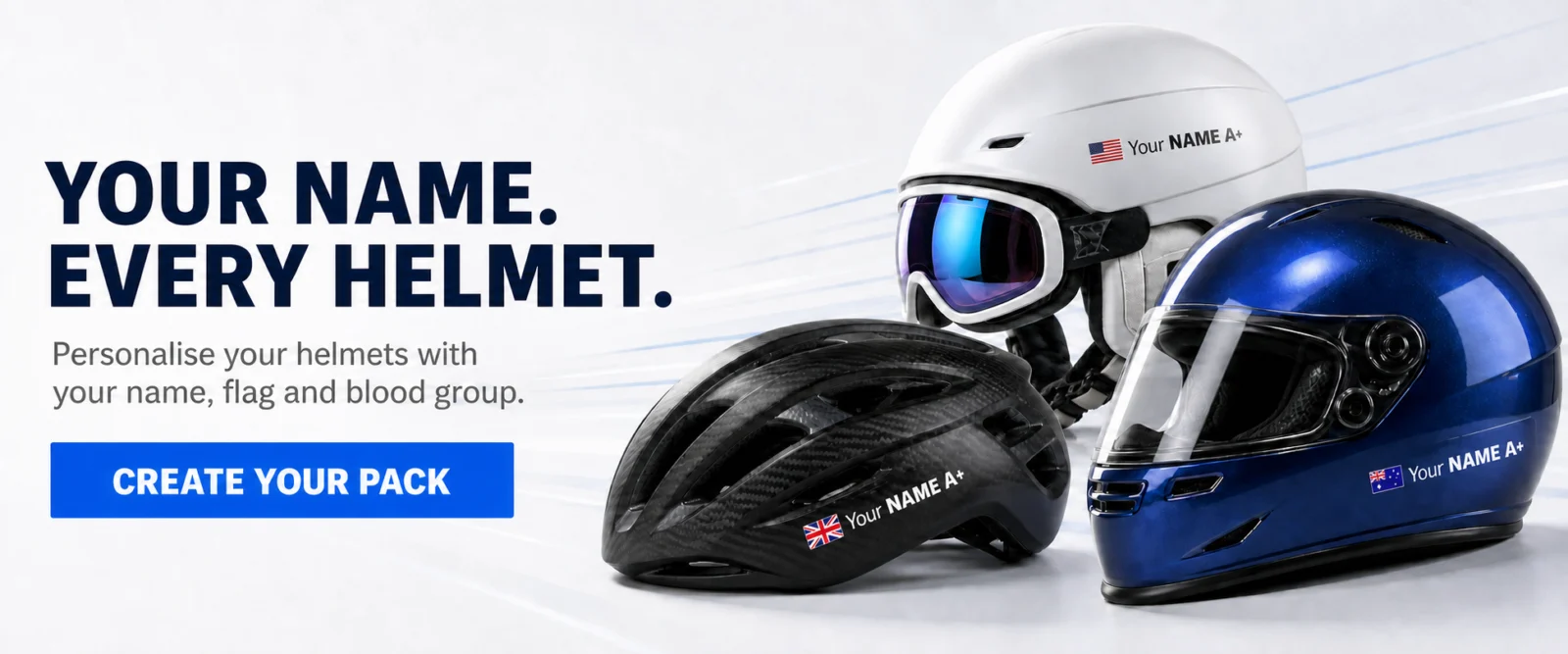
A visible equipment label and a medical ID serve different purposes
An identification bracelet can carry a name and emergency contact. A dedicated medical ID may carry additional information; discuss any specific medical identification needs with your healthcare professional.
A practical difference is that a sticker remains on the labelled equipment. That can make an item easier to recognise, but a bike or helmet can become separated from its owner. A sticker must not be treated as a substitute for identification carried on the person.
If you have relevant conditions, allergies or medications, follow your healthcare professional’s advice about medical identification. A decorative name-and-flag sticker does not provide a complete or verified medical record.
Situations where equipment identification can be useful
A name and flag can be useful for recognising your equipment in several riding situations:
- Solo rides. Carry suitable identification and an emergency contact when riding alone; a name on equipment is not a substitute.
- Group rides and sportives with strangers. The people around you may not even know your name.
- Long-distance or remote routes, where planning communication and emergency access is particularly important.
- Triathlon and race environments, where hundreds of similar bikes and helmets make it harder for anyone — official or bystander — to know whose is whose.
Choose placement according to the equipment, not a medical claim
Before applying a sticker to a helmet, check whether its manufacturer permits compatible adhesives. Keep ventilation, labels and retention systems clear. A suitable frame surface may be another option; no placement guarantees medical identification.
A small detail, a real upside
Most riders add a name because it looks personal and makes equipment easier to recognise. That is a practical benefit, but it must not be presented as proven protection, faster treatment or a reliable way to identify an injured person.
At Pegatin, our name-and-flag stickers personalise cycling equipment. Check the available surface, contrast and the manufacturer’s compatibility guidance before applying them to a frame or helmet.
Create your own name-and-flag stickers at Pegatin →
Frequently asked questions
Should I add more than just my name? A name can label equipment, while an emergency contact or medical details may belong on a dedicated personal identification device. Follow professional advice for any specific medical needs.
Is a helmet sticker as durable as one on the frame? Durability depends on the surface, application and use. Check the helmet manufacturer’s adhesive guidance and the sticker’s care instructions; do not assume all materials are compatible.
Does this replace a medical ID bracelet? No. A decorative equipment sticker does not replace a dedicated medical ID, verified medical information or identification carried on the person.
Can I put it on more than one spot? You can label more than one suitable surface after checking compatibility and available space. Keep mandatory markings and functional parts clear; this does not guarantee faster emergency identification.
Make Your Helmet Easier to Identify
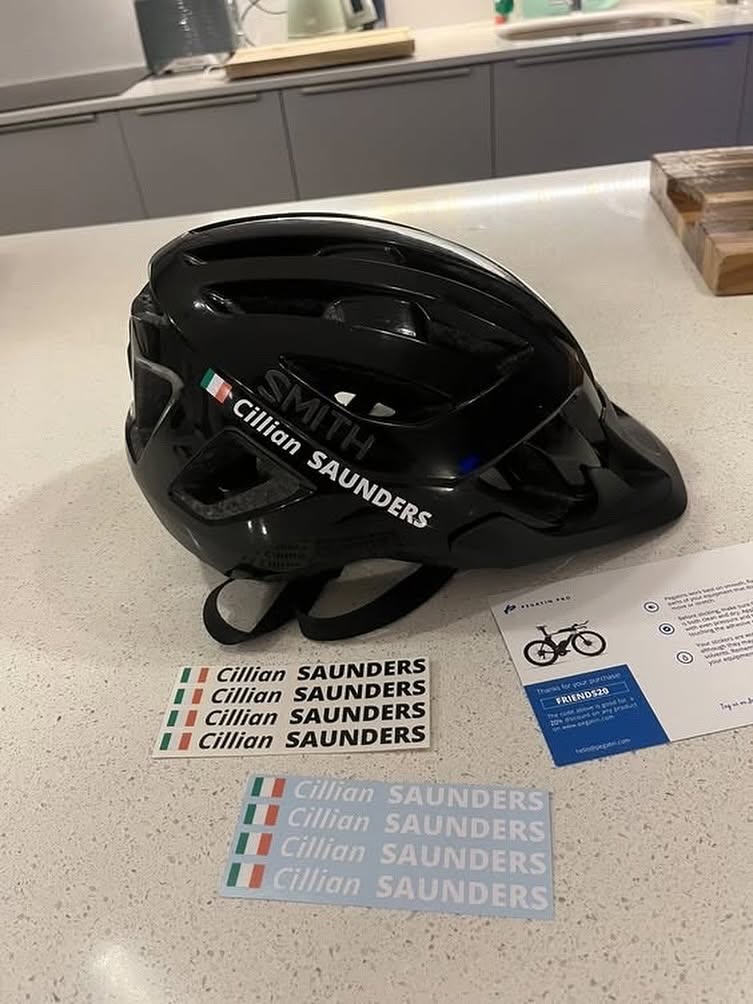
A small name-and-flag sticker gives your helmet a personal detail and may help you recognise it among similar equipment. Follow the manufacturer’s guidance and keep its original safety labels and functional parts unobstructed.
Related reading
Explore our custom helmet name sticker guide for more identification and placement advice.
Create your personalised bike name and flag stickers — use code PRODECALS for 15% off
Order well in advance: production and delivery take time. Check the current estimate for your destination.