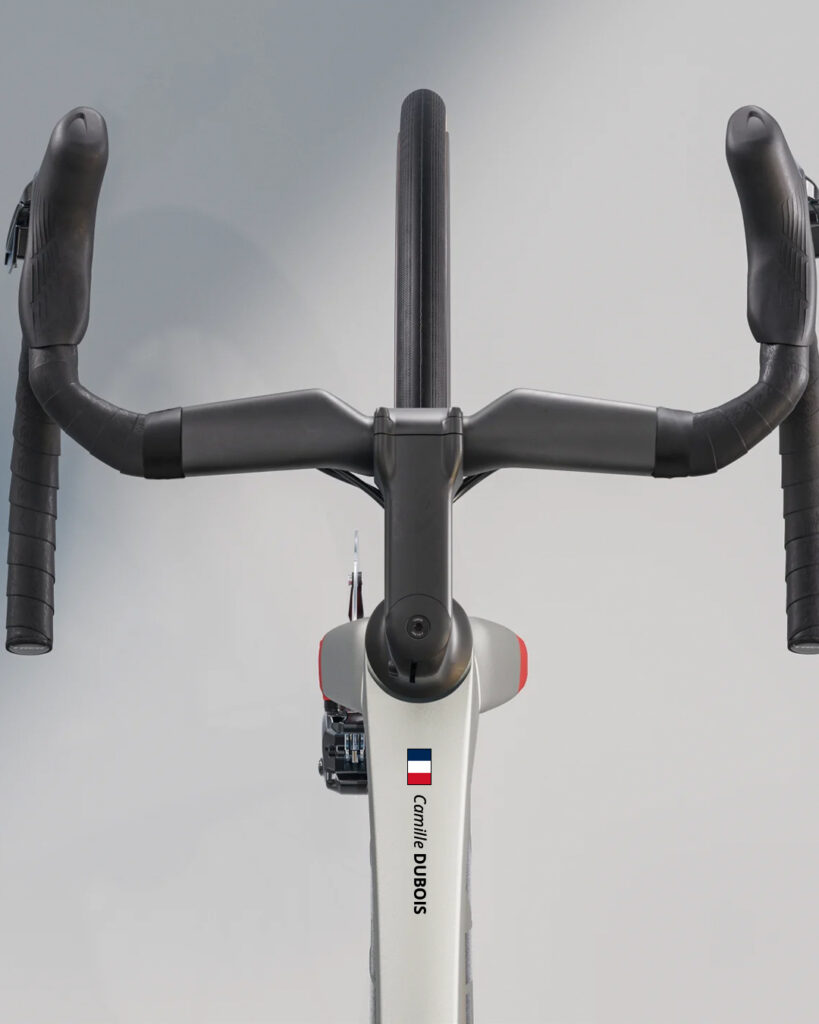
Do stickers damage carbon bike frames? In most cases, a suitable vinyl sticker applied to a properly finished carbon frame is unlikely to cause damage. The main risks come from unsuitable adhesives, delicate finishes, prolonged UV exposure or incorrect removal — not from the carbon itself.
It’s one of the most common questions we get, and a fair one — carbon frames aren’t cheap, and nobody wants to trade a cosmetic upgrade for a damaged paint job. Here’s the honest, detailed answer.
Your name. Your flag. Your carbon bike.
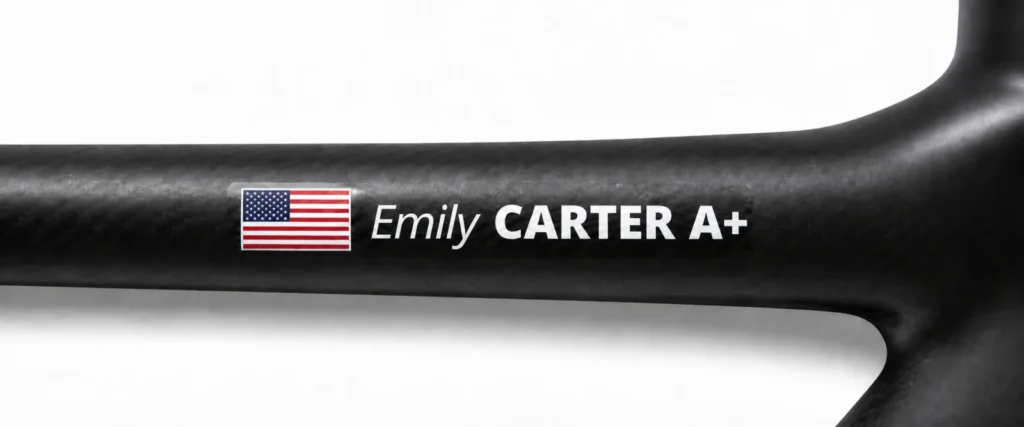
Explore your personalised name-and-flag design.
Save 15% with PRODECALS.
Do Stickers Damage Carbon Bike Frames?
Choose a decal intended for your type of surface. Compatibility still depends on the paint, clear coat and their condition. Follow the frame maker’s care instructions; no adhesive guarantees mark-free removal on every finish.
The risk isn’t the sticker itself. It’s almost always one of these three things:
- Cheap, low-grade vinyl not designed for the job
- Leaving a sticker on for years in harsh sun without ever moving it
- Removing it the wrong way (yanking it off cold, scraping with something sharp)
Avoid those three, and a sticker is one of the safest upgrades you can make to a bike.
Make your bike easier to identify and give it a clean professional look.
Are Vinyl Stickers Safe on Carbon Bike Frames?
A few things make a properly made sticker low-risk:
- The adhesive is designed to release cleanly. Bike and car-grade vinyl uses a pressure-sensitive adhesive that bonds to the surface but doesn’t bond into it — unlike, say, super glue or epoxy.
- It sits on top of the clear coat, not the carbon itself. On any painted or clear-coated frame, the sticker never actually touches the structural carbon fiber underneath. It’s resting on the protective layer that’s already there to take exactly this kind of contact.
- UV and weather resistance is built in. Decent vinyl is made to handle sun and rain for years without becoming brittle or leaving residue behind.
This is the same logic that lets pro teams plaster sponsor logos and rider names all over frames worth tens of thousands of euros, season after season, without a second thought.
If you’re choosing a personalised decal for your bike, our guide to custom bike decals explains what to look for when adding your name and flag while keeping the original frame design clean.

When Can Stickers Cause Problems on a Carbon Frame?
Quality vinyl decals designed for vehicle and bicycle use are generally suitable for properly finished bike frames. However, paints, clear coats and matte finishes vary between manufacturers, so it’s always worth checking your frame manufacturer’s care instructions if you’re unsure.
If adhesive residue remains, use a soft microfiber cloth and a cleaner confirmed to be compatible with your frame’s finish. Check the manufacturer’s care instructions before using isopropyl alcohol or an adhesive remover.
How to apply a sticker the right way
Getting the application right is most of the battle:
- Clean and dry the surface first. Wipe away dust, grease and water completely.
- Position before you commit. Use low-tack tape to hold the sticker in place and check the alignment before peeling the backing.
- Press from the center outward. This pushes air out as you go and avoids bubbles.
- Avoid extreme cold when applying. Mild, room-temperature conditions help the adhesive bond evenly.
How to remove a sticker without leaving a mark
When it’s time for a new look — or you’re prepping the bike for resale — removal is just as straightforward:
- Warm it up gently. A hairdryer on a low setting (or simply a warm day) softens the adhesive and makes it peel far more easily.
- Pull slowly, at a low angle, rather than straight up. This reduces the chance of any adhesive staying behind.
- For any residue, use only a cleaner approved for your frame’s finish. Do not assume alcohol or adhesive remover is harmless: follow the manufacturer’s care instructions and stop if the finish changes or begins to lift.
- Never use a metal scraper or blade directly on the frame — that’s the one thing that genuinely can scratch paint or clear coat.
For the full walkthrough with more detail, see our complete guide: how to correctly apply and remove custom bike stickers.
Frequently asked questions about carbon frame stickers
Will a sticker void my frame’s warranty? Warranty conditions vary between manufacturers. Applying a sticker doesn’t automatically mean your frame warranty will be affected, but always check the manufacturer’s warranty and care instructions if you’re concerned.
How long can I leave a sticker on? Years, in most cases, with no issue on gloss finishes. On matte paint, it’s worth moving or refreshing decals every so often if you want to avoid any long-term mark.
Are these stickers safe on a painted frame, not just carbon? Yes — the same principles apply to aluminum, steel and titanium frames with painted or clear-coated finishes.
What about my helmet? Helmet materials and manufacturer recommendations vary. Before applying any adhesive, check the helmet manufacturer’s instructions. Read our complete guide to stickers on bike helmets.
Personalize Your Carbon Bike Without Hiding Its Design
Once you know how to choose and apply a sticker correctly, personalization can stay subtle. A small custom name-and-flag sticker adds your identity to the bike while keeping the original frame graphics and carbon finish as the main focus.
Personalise Your Bike With Confidence
Your name and flag, on your bike.
Create personalised name-and-flag stickers inspired by professional cycling.
Once you have checked that the frame finish is suitable, compare Pegatin BASIC, PRO and PLUS to choose the most appropriate personalised decal for the bike colour and surface.
Create your personalised bike name and flag stickers — use code PRODECALS for 15% off