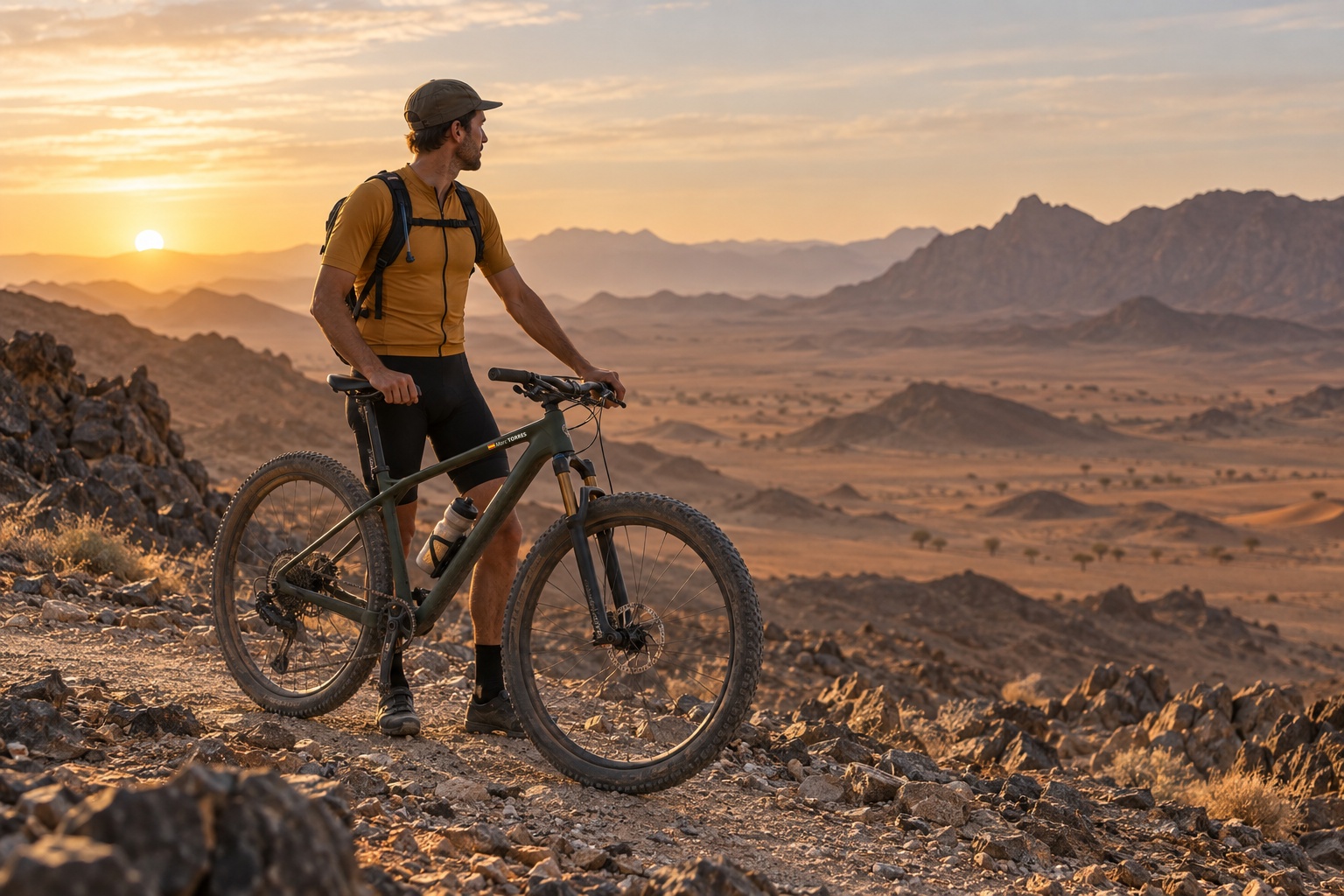
Škoda Titan Desert Morocco 2027 takes place from 25 to 30 April in Morocco. It is a six-day cycling adventure, with separate mountain-bike and gravel routes announced for the new edition. This guide brings together the dates, registration options and practical preparations that matter before you commit to a desert stage race.
The complete 2027 stage routes were still being finalised when this guide was checked on 23 September 2026. Distances and elevation from an earlier edition are not the confirmed itinerary for your trip.
Titan Desert Morocco 2027 at a glance
- Dates: 25–30 April 2027.
- Location: Morocco; check the final itinerary for stage towns and transfers.
- Format: six stages, with MTB and gravel routes.
- Route status: detailed 2027 routes not yet finalised at the time of review.
- Registration: the official 2027 platform lists MTB, gravel and separate Škoda Adventure options.
These dates concern Morocco, not Titan Desert Almería in Spain. Check the event name as well as the year when comparing race information, travel packages or entry pages. See the official event website and 2027 registration platform.
MTB or gravel: what is different for 2027?
The organiser has announced two routes for 2027, one for mountain bikes and another for gravel bikes. They will share some sections, but each stage will be adapted to the selected discipline. Do not assume that choosing gravel means riding the old MTB course on different tyres.
Choose your category before deciding on a bike setup. For MTB, compare your familiar cross-country bike with the final terrain and support arrangements. For gravel, pay particular attention to tyre clearance, gearing, comfort and carrying capacity. These are preparation considerations, not a substitute for the category rules. Read the official route announcement before making equipment purchases.
How long are the stages, and how hard is the race?
The organiser describes a six-stage event across desert and mountain terrain, but the exact 2027 distances and elevation profiles are still pending. We are not presenting the 2026 route as the new course.
For your own preparation, think beyond one impressive long ride. The practical challenge of a stage event is getting up, checking the bike and riding again after several consecutive days. Test your riding position, clothing, luggage and navigation setup on back-to-back outings. Aim to discover rubbing straps, awkward bottle access or charging problems at home, not on the first morning away.
Registration and budget: compare the complete trip
On 23 September 2026, the official platform displayed €2,195 per participant for the MTB and gravel entries, and €1,995 for the separate Škoda Adventure MTB and gravel options. These are dated reference prices, not a quote or guarantee of availability. The platform describes Adventure as a self-sufficient format without external assistance; do not choose it simply because the displayed price is lower.
Before paying, compare the current conditions for your selected format. Make a written budget with separate lines for entry, personal travel, bicycle transport, transfers, any optional support, equipment and other trip costs. Confirm which items are included rather than adding every item twice or assuming that a headline entry price covers everything. Use the organiser’s registration platform for the current payable amount.
Organising travel and bicycle transport
Plan the journey around the final participant itinerary, not only the first and last race dates. Confirm when and where rider check-in takes place, the transfer arrangements and when you can realistically depart after the finish. Do not book a connection based on an airport or timetable from a previous edition.
Decide how the bicycle will travel before packing. Record the carrier’s allowance, packaging requirements and handover times. Photograph your setup, keep a short reassembly checklist and arrange a test ride after rebuilding it. If travelling with friends, agree which shared tools and spares each person carries instead of assuming someone else has everything. Consult the official travel information.
Equipment: official list and a practical packing routine
The organiser’s equipment page lists a GPS, approved helmet, hydration bag, thermal blanket, whistle, headlamp and mobile phone among the items riders supply themselves. It also identifies organiser-provided items such as race numbers, timing chip and geolocation device. Check the current equipment information and participant regulations for your category: the list below is an organisational aid, not the complete official rulebook.
- Navigation and power: load and test the correct files when issued; label cables and organise your charging routine.
- Bike tools: carry compatible repair items you know how to use; check them against your wheels, tyres and drivetrain.
- Daily riding kit: rehearse with your intended shoes, gloves, glasses and hydration setup.
- Camp organisation: separate riding kit, repair supplies and off-bike clothing so that each is easy to find.
- Travel documents: keep the registration confirmation, travel details and required documents accessible.
A simple routine between stages
Reduce the number of decisions you need to make when tired. After each day’s riding, organise your kit, inspect the bike and note any issue that needs attention. Put charging equipment together, prepare the next day’s clothing and review the organiser’s latest information. Use a short checklist rather than relying on memory.
Practise this routine during preparation weekends. A small problem repeatedly ignored can become a bigger interruption later. For mechanical work beyond your skills, use appropriate qualified help and the support arrangements available within your event category.
Give your equipment a personal identity
A name-and-flag Pegatin on the top tube makes your bike feel like your own from the first training ride to the journey home. Matching details on suitable accessories can bring the whole setup together. Choose your name and flag in the personaliser, then position the sticker on a clean, smooth surface following the application instructions.
Your personal sticker complements your equipment; it does not replace the organiser’s race number, timing chip or mandatory identification. Pegatin is an independent product, not an official event entry or accreditation.
Frequently asked questions
When is Titan Desert Morocco 2027?
The event is announced for 25–30 April 2027. The official registration platform confirms the 25 April start. Check participant information for arrival and departure arrangements.
Can I choose gravel instead of MTB?
Yes. The 2027 organiser announcement includes separate gravel and mountain-bike routes. Select the appropriate registration format and check its rules before preparing your bike.
Are the 2027 stage distances confirmed?
Not in the route announcement checked on 23 September 2026. Consult the official route page as details are released; older stage tables should not be treated as the new itinerary.
Is Morocco the same event as Titan Desert Almería?
No. They are distinct events in different countries. This guide covers Morocco and its 2027 edition.
What should I personalise before travelling?
Start with your bicycle’s top tube and suitable equipment you regularly use. Choose a coordinated name and flag, while leaving technical markings and official race identification unobstructed.
Your next adventure, your name, your flag. Use EVENT15 for 15% off and personalise your Pegatin.
Independent guide. Information reviewed on 23 September 2026 against the official event, route, equipment and registration pages linked above. Dates, prices and logistics can change; the organiser’s current conditions govern participation.