Cricket helmet name stickers offer players and clubs a compact way to identify similar helmets, kit bags and equipment cases. A clean name-and-flag design can look professional at training, club sessions and tournaments. However, cricket equipment rules vary by competition. Therefore, always confirm whether a personal marking is permitted on the helmet before applying it.
This guide explains the Pegatin format, readable sizing, placement and team ordering. It also separates personalisation from protection. A decal never changes a helmet’s certification, fit, grille position or ability to protect the player.
Your name. Your flag. Your cricket helmet.
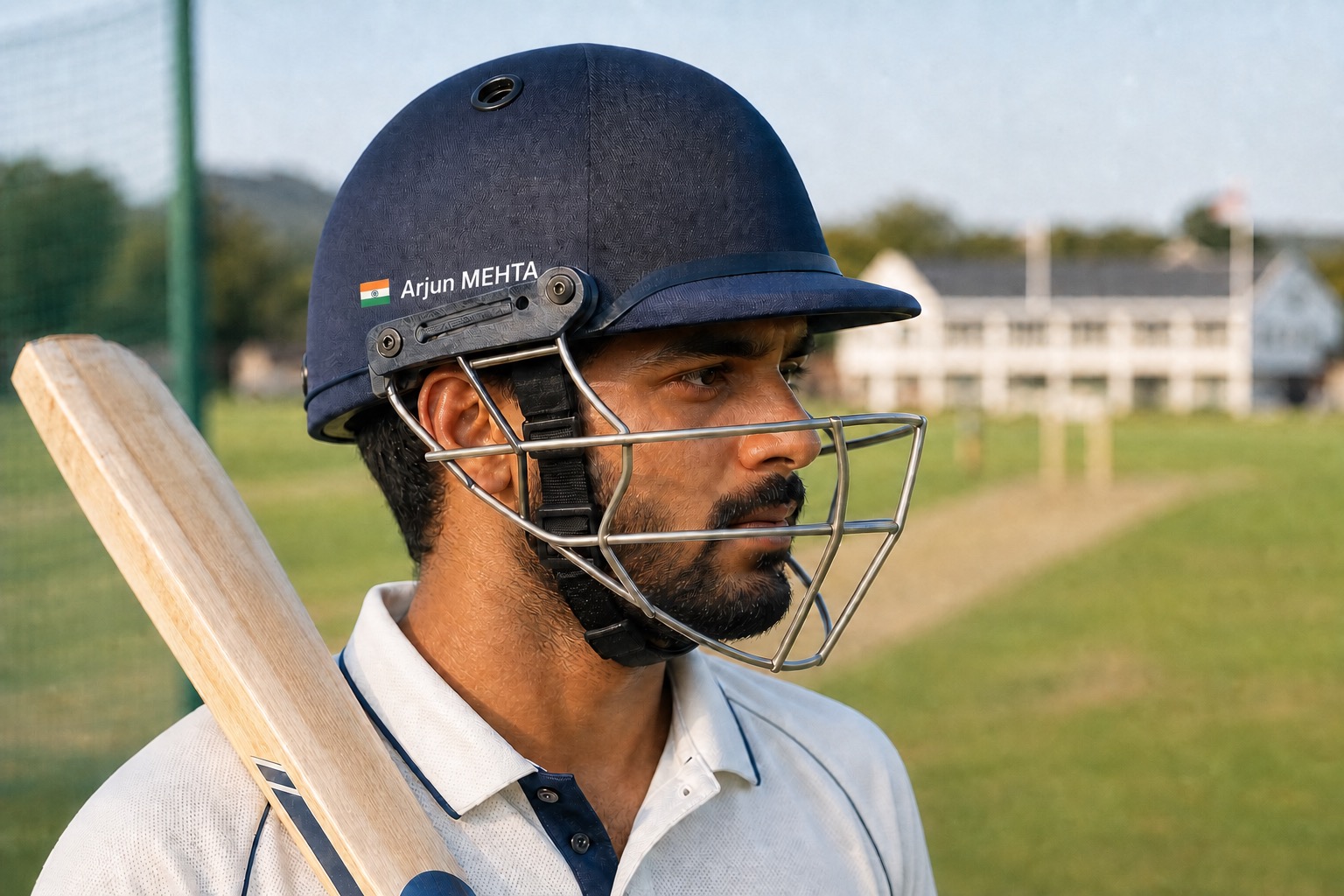
A transparent name-and-flag decal adds a clean personal identity to a cricket helmet without an opaque label.
Give your cricket kit a personal name-and-flag finish.
Save 15% with HELMET15.
What should cricket helmet name stickers include?
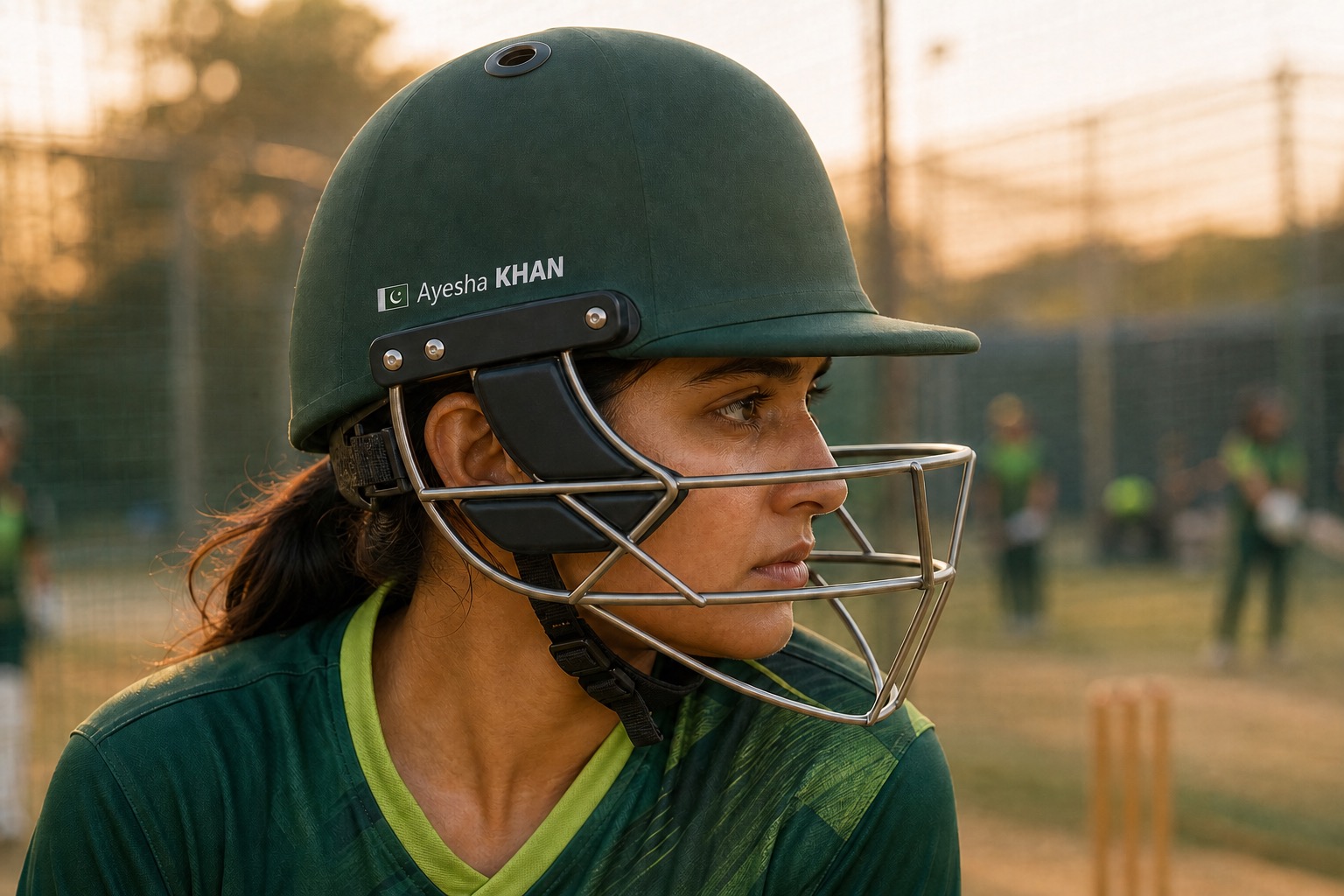
The best layout is simple and easy to check. First, place the selected flag at the far left. Next, set the first name in Open Sans Italic with only its initial letter uppercase. Finally, use Open Sans Bold capitals for the surname.
- Flag: national, regional or selected sporting identity
- First name: Open Sans Italic with one initial capital
- Surname: Open Sans Bold in full capitals
- Backing: transparent vinyl without a visible rectangle
- Print colour: black or white for strong shell contrast
- Scale: compact and clear of every protective component
Because the backing is transparent, the shell colour remains visible around and between the printed elements. As a result, the detail looks integrated instead of resembling an opaque paper label.
Check cricket equipment rules before adding a decal
Begin with the rules for the player’s exact competition. The MCC Laws of Cricket appendices define a protective helmet as hard headwear designed to protect the head, neck or face, including faceguards, grilles and neck guards. Consequently, a helmet should be treated as protective equipment rather than a decorative surface.
The current ICC playing conditions and regulations provide the official resources for international cricket. In addition, the current ICC clothing and equipment regulations restrict visible helmet identifications to the approved positions and types shown in the regulation. Therefore, a personal name decal should not be assumed legal for international match use.
Domestic, club, school and recreational rules can differ. Accordingly, ask the coach, club official, kit manager or event organiser before visible competition use. Also follow the instructions for the exact helmet model and never cover its safety-standard label.
- Confirm competition and club permission.
- Keep every certification and warning label visible.
- Do not cover vents, grille mounts, screws or adjustment points.
- Never hide cracks, deformation or impact damage.
- Do not drill, cut, paint, heat or chemically treat the shell.
- Use the kit bag or equipment case when helmet marking is restricted.
The ECB helmet guidance explains the BS7928:2013 standard and the differences between helmets tested for senior and junior ball sizes. Personalisation must never obscure the markings that identify the standard or the helmet’s intended use.
Best placement for a cricket helmet name decal
When both the manufacturer and competition rules permit a marking, choose a small uninterrupted shell area. A lower rear-side position may be readable when helmets are stored together. Nevertheless, designs differ, so inspect the actual helmet before selecting the location.
| Possible position | Why it may work | What must stay clear |
|---|---|---|
| Lower rear-side shell | Compact identification without dominating the helmet | Grille mount, vent, screw and safety label |
| Lower rear shell | Easy to recognise on club equipment shelves | Adjustment point, certification mark and damage |
| Cricket kit bag | Useful when match rules restrict visible helmet marks | Zip, seam, handle and textured fabric |
| Equipment case or locker | Practical for tours, academies and camps | Hinge, latch and heavily textured sections |
Above all, do not squeeze a long name between hardware and shell edges. Instead, shorten the first name, use the surname alone or move the complete design to the kit bag.
Choose the right size and print colour
First, measure only the smooth area approved by the manufacturer. Then subtract a margin around the grille bracket, vents, screws, labels and edges. Finally, compare the remaining width with the complete flag-and-name design.
White lettering usually reads well on navy, bottle green, black and maroon helmets. By contrast, black lettering works on white, silver, cream and pale shells. The transparent backing should visually disappear, while the name remains legible in the pavilion and outdoors.
Long surnames need more horizontal space. Therefore, reduce the whole layout slightly instead of compressing the characters. Alternatively, use the surname alone while keeping the flag at the far left.
Cricket helmet name stickers for clubs and academies
Club and academy orders can give players a consistent equipment identity while retaining each person’s name and flag. This is useful for nets, tours, camps, training groups and shared kit rooms. Moreover, one template makes approval and spelling checks easier.
Before ordering, prepare a roster with the exact first name, surname, flag and print colour. In addition, record the intended surface: helmet, bag, case or locker. This detail matters because the permitted match-day surface may differ from the best everyday identification surface.
- Ask every player to confirm spelling and accents.
- Let each person approve the displayed flag.
- Keep typography, scale and spacing consistent.
- Confirm the rules for each competition.
- Check every helmet model individually.
- Order spare sets for bags and equipment cases.
For school and junior players, route the final design through the coach or kit manager. They can decide whether the marking is appropriate for the player’s fixtures and equipment policy.
Batters, wicketkeepers and close fielders
Batters, wicketkeepers standing up to the stumps and close fielders may use protective helmets in high-risk situations. However, their helmet configurations can differ. Grille settings, neck guards and adjustment hardware all require clear space.
Therefore, measure the exact helmet rather than relying on a universal sticker size. Meanwhile, a kit bag gives the club more room for a readable name and avoids possible conflict with match restrictions.
How to apply a cricket name sticker neatly
Only continue after permission is confirmed. Next, follow the helmet manufacturer’s cleaning guidance exactly. Avoid solvents, abrasive products and heat unless expressly approved.
- Wash and dry your hands.
- Inspect the helmet and stop if damage is visible.
- Select the approved smooth area.
- Clean it only as the manufacturer directs.
- Allow the surface to dry completely.
- Position the decal with its backing still attached.
- Check that the flag is at the far left and the name is level.
- Apply gently from one end without stretching the vinyl.
- Recheck the grille, vents, fasteners, labels and fit.
Afterward, include the decal in normal equipment inspections. If it lifts, approaches a fastener or interferes with inspection, follow the manufacturer’s removal instructions before the next session.
A personalised cricket gift
A name-and-flag set can mark a first century, team selection, birthday, tour or end-of-season award. It is particularly helpful when several players own similar navy or green helmets and kit bags. However, confirm the spelling, flag and permitted surface before ordering.
For more sport-specific ideas, visit our custom helmet name stickers hub. You can also compare baseball helmet name stickers, lacrosse helmet name stickers and ice hockey helmet name stickers.
Our flag-selection guide explains nationality, regional and combined-flag options for personalised designs.
Frequently asked questions
Can I put a personal name sticker on any cricket helmet?
No. Check the exact helmet instructions and competition rules. If permission is unclear, personalise the cricket bag or equipment case instead.
Are name decals allowed in international cricket?
Do not assume they are. ICC clothing and equipment rules restrict visible helmet identifications. Players and teams should obtain official approval for the exact competition.
Does the Pegatin have a white background?
No. The intended design uses transparent vinyl. Therefore, the helmet or bag colour remains visible around and between the flag and letters.
Can a whole cricket club order matching designs?
Yes. Use one layout, then personalise the name and flag. Confirm the permitted surface and match rules for every player.
Where should the flag appear?
The flag sits at the far left. It is followed by the first name in Open Sans Italic and the surname in Open Sans Bold capitals.
Create your cricket name and flag
The best cricket helmet name stickers are compact, readable and approved for the intended use. Choose the name and flag, measure the permitted area and keep every certification or protective component clear.
Personalise your cricket helmet and kit
Save 15% with code HELMET15. Free worldwide shipping.
Create your cricket PegatinsOrder in advance of your event or gift date: production and delivery take time. Check the current estimate for your destination.