Is it safe to put a sticker on a bike helmet? Compatibility depends on the helmet and adhesive. Check the manufacturer’s instructions first.
Here’s what actually matters.
Your name. Your flag. Your helmet.
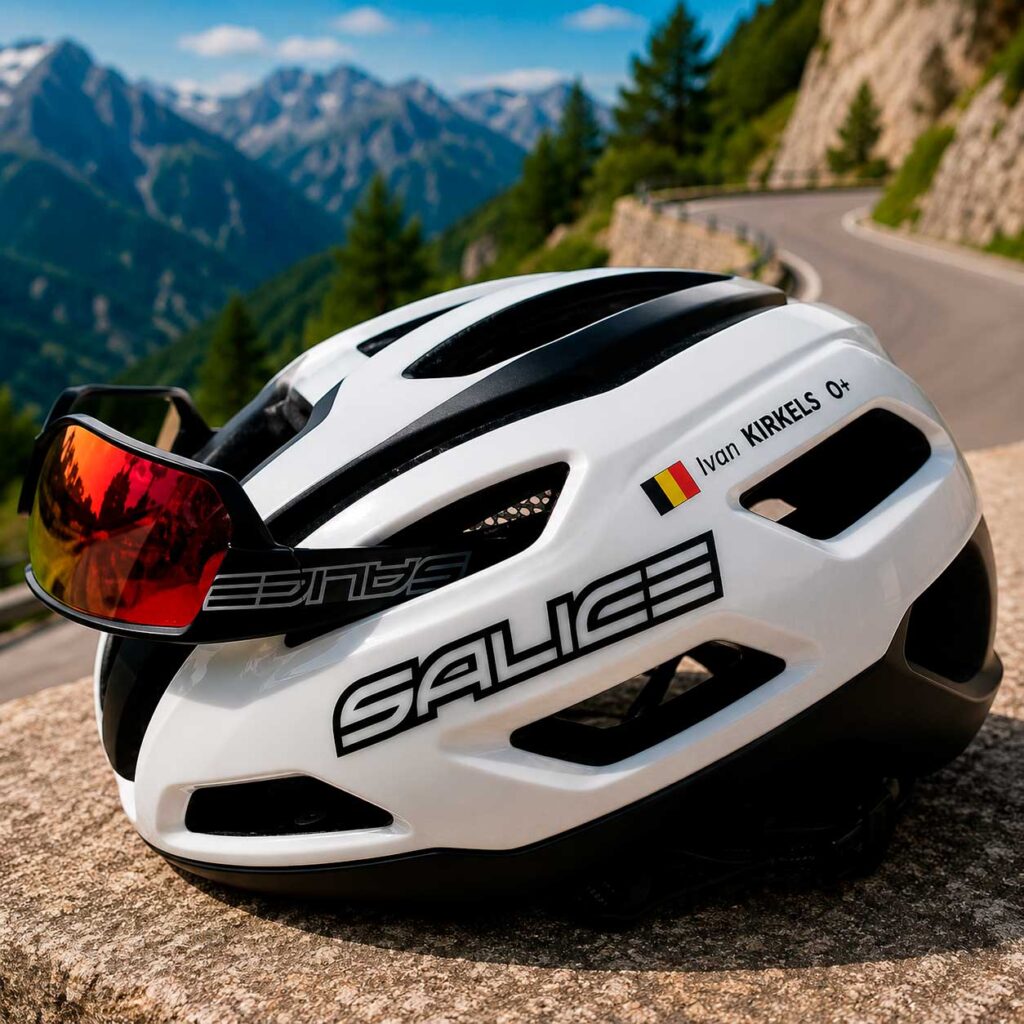
Choose your name and flag for a personal finishing touch.
Create my PegatinSave 15% with HELMET15
Free worldwide shipping.

Are Stickers Safe on Bike Helmets?
“Is it safe to put a sticker on my helmet?” is really two separate questions wearing one sentence:
- Will the adhesive damage the shell or the foam underneath it?
- Will a sticker somehow interfere with how the helmet protects me in a crash?
They have different answers, so it’s worth taking them one at a time.
Can Sticker Adhesive Damage a Bike Helmet?
The Bicycle Helmet Safety Institute explains the compatibility issue: some adhesives may affect shell plastics. Appearance alone cannot confirm safety.
Do not assume that contact with the outer shell is harmless. Shell materials differ between models.
A neat finish does not prove compatibility. Ask the helmet manufacturer if its instructions do not cover stickers.
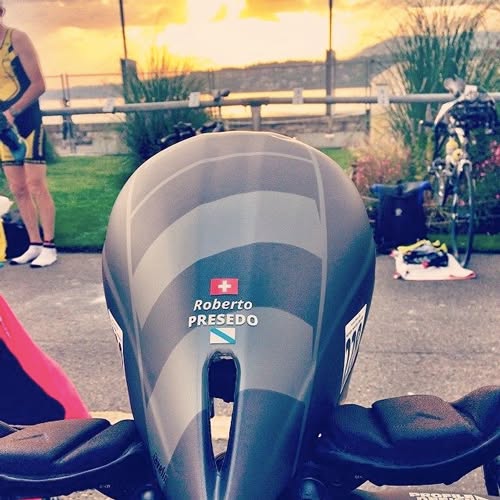
Can a Sticker Affect a Bike Helmet’s Impact Protection?
Potentially. An incompatible adhesive may weaken the helmet shell; whether that affects a particular helmet in a crash cannot be judged by appearance. Check the helmet manufacturer’s instructions and confirm compatibility before applying a sticker.
Pegatin personalises equipment; it does not certify the safety of each helmet-and-adhesive combination.
Where Is the Best Place to Put a Sticker on a Bike Helmet?
If the helmet manufacturer permits a compatible sticker, placement still matters:
- Flat rear or side panels are a practical starting point when approved by the manufacturer — choose a smooth surface away from vents and the retention system.
- Avoid covering vents. Keep ventilation openings and protective systems unobstructed; follow the helmet manufacturer’s placement instructions.
- Avoid the chin strap and buckle hardware. Nothing should interfere with how the retention system moves or fastens.
- Skip any area with visible cracking or damage. If you can see a crack, the helmet needs replacing regardless of any sticker — that’s a separate, more important issue.
For more on choosing a flat surface and matching finish to your helmet’s colour, see our guide on name and flag stickers for your helmet.
Want the same personalised identity on your bike? Our complete guide to bike name stickers explains how to add your name and flag for the clean, pro-inspired cycling look.
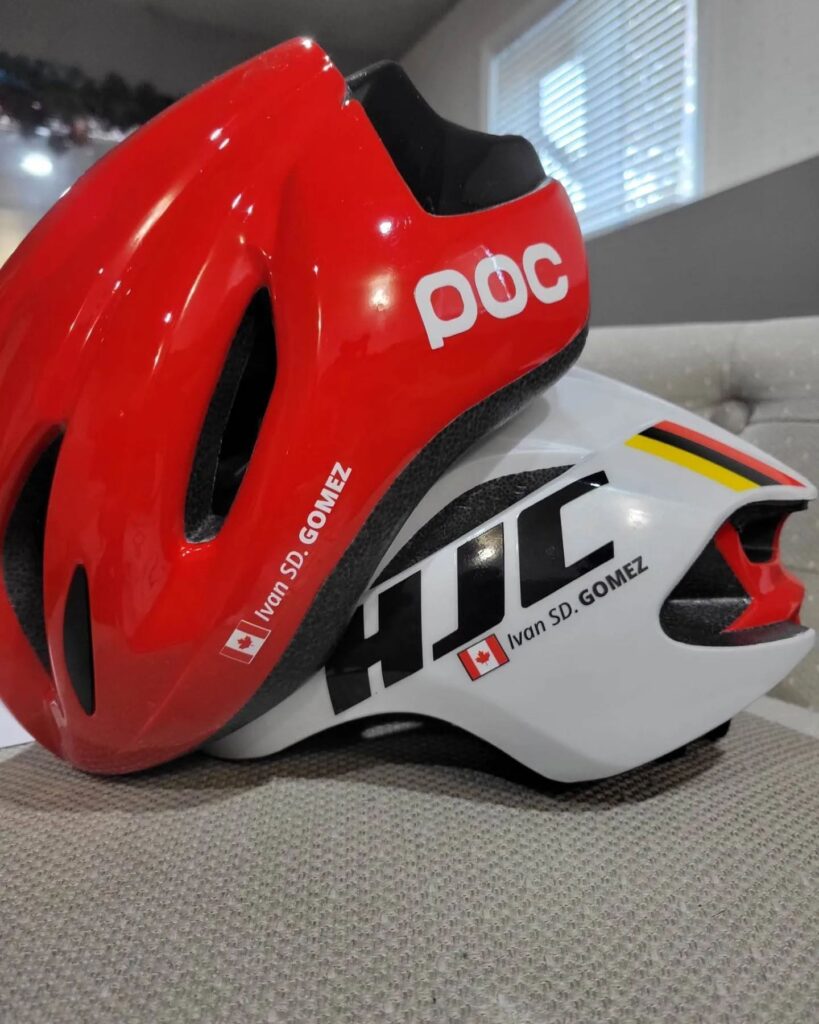
Never Use a Sticker to Hide Helmet Damage
Never use a sticker to hide damage. Follow the manufacturer’s inspection and replacement instructions.
Frequently asked questions
Can removal leave a mark? It can. Follow the maker’s cleaning advice; avoid unapproved solvents, scraping or heat.
What should remain uncovered? Leave vents, labels, adjustment parts and inspection areas clear.
Does one approval cover every helmet? No. Check each model separately.
The real takeaway
Choose personalisation only after confirming compatibility. If you cannot confirm it, leave the helmet unchanged.
CREATE YOUR PERSONALISED NAME & FLAG STICKERS →
If you are looking beyond cycling, the same personalised name-and-flag concept can be used across many other helmet sports, including motorcycle, karting, racing, hockey, baseball, skiing, snowboarding and more. Explore our complete guide to custom helmet name stickers for every sport.
Create your personalised name and flag stickers — use code HELMET15 for 15% off
Order well in advance: production and delivery take time. Check the current estimate for your destination.