If you want to make your bike lighter, start by removing unnecessary accessories and then focus on the wheels, tyres, tubes, finishing kit and drivetrain.
The best upgrade depends on your bicycle, budget and riding style. A lighter component is not automatically better if it reduces comfort, reliability or safety.
In this guide, we explain how to make a road, gravel or mountain bike lighter, which changes offer the best value and where saving weight is unlikely to be worth the money.
How can you make a bike lighter?
The simplest way to make a bike lighter is to weigh the complete bicycle, identify its heaviest removable components and replace or remove them in a logical order.
For most riders, the best sequence is:
- Remove accessories you do not use.
- Replace heavy tyres or inner tubes.
- Upgrade the wheelset.
- Review the saddle, seatpost, handlebar and stem.
- Consider the crankset, cassette and other drivetrain components.
- Replace the frameset only if you are planning a major rebuild.
Before buying anything, decide why you want a lighter bike.
Reducing weight can make a bicycle feel more responsive when climbing and accelerating. However, aerodynamics, tyre choice, rolling resistance, riding position and fitness can have a greater effect on overall speed.
The objective should be to build a bicycle that performs better for you, not simply to achieve the lowest possible number on a scale.
Make your bike easier to identify and give it a clean professional look.
Weigh your bike before making changes
You need a starting point before deciding which upgrades are worthwhile.
Weigh the bicycle in the same configuration in which you normally ride it. Include the pedals, bottle cages, computer mount and any permanent accessories.
Then make a second list of removable items such as:
- Bottles
- Saddle bag
- Pump
- Lights
- Lock
- Mudguards
- Tool kit
- Spare clothing
This separates the weight of the bicycle from the equipment you carry.
A luggage scale can provide a useful estimate for the complete bike. A small digital scale is more helpful when comparing individual components.
Record the original weight and the weight of every replacement part. Manufacturer figures can be useful, but independently weighing the components provides a more reliable comparison.
The best ways to make your bike lighter
The following changes are ordered approximately from the simplest to the most expensive. Actual weight savings vary considerably between bicycles.
1. Remove accessories you do not need
The cheapest way to reduce bicycle weight is to remove equipment that you carry but rarely use.
Possible examples include:
- An unused second bottle cage
- Large brackets or old computer mounts
- A heavy lock on rides where it is unnecessary
- Mudguards outside the wet season
- Oversized lights during daylight rides
- Duplicate tools
- Excess packaging inside a saddle bag
- Decorative accessories with no practical purpose
Do not remove essential safety or repair equipment simply to achieve a lower number.
A spare tube, tyre levers, inflation system, identification and suitable lights can be far more valuable than a small weight saving.
Review what you carry and choose lighter or more compact versions when appropriate.
2. Reduce the weight of your tyres and tubes
Tyres and inner tubes can be a relatively affordable place to reduce weight.
Lighter, more flexible tyres can also improve the way the bicycle feels. However, extremely light racing tyres may offer less puncture protection and durability than everyday models.
Possible options include:
- Replacing very heavy training tyres
- Using lighter inner tubes
- Using TPU inner tubes where compatible
- Converting to tubeless where the rims and tyres support it
- Choosing a tyre appropriate for the actual terrain
Do not choose a tyre based on weight alone. Width, grip, puncture resistance, pressure range and compatibility are more important.
When changing tyre size, confirm that there is sufficient clearance around the frame, fork and any mudguards. Tyres carrying the same printed size can measure differently when fitted to different rims.
3. Upgrade the wheelset
A lighter wheelset is one of the most noticeable upgrades on many bicycles.
Reducing wheel weight can change how quickly the bike responds when accelerating or changing direction. Modern wheels can also provide aerodynamic, stiffness or tyre-support benefits.
Before buying a wheelset, check:
- Rim-brake or disc-brake compatibility
- Axle type and dimensions
- Freehub body
- Cassette compatibility
- Recommended tyre sizes
- Tubeless compatibility
- Maximum system weight
- Frame and fork clearance
Carbon wheels can reduce weight, but a good aluminium wheelset may offer better value and easier maintenance.
The lightest wheel is not necessarily the best. Road quality, rider weight, intended use, crosswinds, spoke availability and repairability should all influence the decision.
4. Choose a lighter saddle
Saddles vary substantially in weight and construction.
Replacing a heavy saddle can save weight without affecting the bicycle’s mechanical systems, but comfort must remain the priority.
A saddle that looks similar to your current one may feel completely different because of its width, shape, padding and rail design.
Do not select a saddle solely because it is lighter. Discomfort can affect your position, power and enjoyment far more than a few extra grams.
If your current saddle fits well, compare alternatives with a similar profile before changing it.
5. Replace the seatpost
A lighter seatpost can produce a modest saving, especially when replacing a basic aluminium component.
Carbon seatposts may also provide a different ride feel, depending on their construction and exposed length.
Compatibility is essential. Check:
- Seatpost diameter
- Minimum insertion
- Maximum extension
- Saddle-rail compatibility
- Manufacturer torque specifications
- Frame material
- Approved assembly compound
Never exceed the minimum insertion mark or improvise a fit between incompatible diameters.
If the frame or post is carbon, use the assembly method and torque value specified by the manufacturer.
6. Upgrade the handlebar and stem
Handlebars and stems are common targets when reducing weight, but they are safety-critical components.
A lighter cockpit may provide a modest reduction and can also help improve fit or comfort. Nevertheless, replacing these components only for weight is rarely the first upgrade we would recommend.
Check:
- Handlebar clamp diameter
- Steerer diameter
- Stem length and angle
- Internal or external cable routing
- Computer and accessory compatibility
- Recommended torque values
- Rider weight or usage restrictions
A professional workshop should install or inspect the parts if you are uncertain about compatibility or torque.
Never drill, cut or modify a component simply to save weight.
7. Review the crankset
A lighter crankset can reduce bicycle weight, but the cost per gram is often higher than with simpler upgrades.
Replacing a crankset can also affect:
- Bottom-bracket compatibility
- Chainline
- Gearing
- Front derailleur setup
- Power-meter compatibility
- Q-factor
- Frame clearance
A crankset upgrade makes more sense when you also want different gearing, improved power measurement or a complete drivetrain update.
If the existing crankset works correctly and provides suitable gearing, other upgrades may offer better value.
8. Use a lighter cassette
Cassettes can vary considerably in weight between product levels.
A lighter cassette can provide a straightforward saving if it is compatible with your drivetrain. It can also be an opportunity to choose a gear range better suited to your terrain.
Before changing it, confirm:
- Number of speeds
- Freehub compatibility
- Maximum sprocket supported by the derailleur
- Chain capacity
- Recommended chain
- Gear range
Do not choose an impractical cassette just because it is lighter. Suitable climbing gears are more useful than a small reduction in component weight.
9. Consider lighter pedals
Pedals are easy to compare and replace, but saving weight here should be secondary to reliability, platform size and cleat preference.
Road riders should consider cleat availability and walking practicality. Mountain-bike and gravel riders should prioritise engagement, mud clearance and durability.
Check the manufacturer’s instructions and remember that the left pedal uses a reverse thread.
A lightweight pedal that does not suit your shoes or riding conditions is not a meaningful upgrade.
10. Review the brake system carefully
Some brake components are lighter than others, but braking performance and reliability must always take priority.
Do not remove rotors, use an unsuitable rotor size or replace essential hardware to reduce weight.
Any change to brake callipers, rotors, hoses or levers must be compatible with the frame, fork, wheels and intended use.
If a brake modification requires bleeding, hose shortening or adapter changes, have the work completed or checked by a qualified bicycle mechanic.
Weight saved from the braking system is never worth reduced control.
11. Replace heavy small parts selectively
Small components can collectively add weight, but this is where riders often spend a great deal of money for very little practical benefit.
Possible parts include:
- Bottle cages
- Thru-axles
- Seat clamps
- Headset spacers
- Computer mounts
- Tubeless valves
- Bar-end plugs
Replace these parts only when the new component is reliable and fully compatible.
Avoid unbranded fasteners or extremely light hardware in safety-critical locations. The original bolts may have specific dimensions, strength ratings or surface treatments.
12. Upgrade the frame or complete bike
Changing the frame is the most expensive way to reduce weight.
A lighter frameset may produce a significant difference, but it normally requires rebuilding the bicycle and checking every component for compatibility.
A replacement frame can affect:
- Bottom bracket
- Headset
- Seatpost
- Brake mounts
- Axles
- Wheel clearance
- Cable routing
- Front derailleur
- Cockpit
- Maximum system weight
When the cost of the frameset, labour and additional components is included, buying a different complete bicycle may offer better value.
A frame upgrade should be considered part of a long-term build, not a quick way to save a few grams.
If you choose a carbon frameset, remember that its surface requires appropriate care. Before adding any decorative element, read our guide to whether stickers can damage a carbon bike frame.
Which upgrades save the most weight?
The answer depends on the original specification of the bicycle.
As a general guide:
| Upgrade | Typical cost | Potential saving | Noticeable while riding? |
|---|---|---|---|
| Remove unused accessories | Free | Low to high | Sometimes |
| Lighter tubes or tubeless setup | Low to medium | Low to moderate | Often |
| Lighter tyres | Medium | Moderate | Often |
| Wheelset | High | Moderate to high | Often |
| Saddle | Medium | Low to moderate | Sometimes |
| Seatpost | Medium to high | Low to moderate | Sometimes |
| Handlebar and stem | Medium to high | Low to moderate | Sometimes |
| Crankset | High | Moderate | Sometimes |
| Cassette | Medium to high | Low to moderate | Rarely |
| Pedals | Medium | Low | Rarely |
| Frameset | Very high | Potentially high | Often |
These are broad comparisons rather than guaranteed figures. Always compare the actual weight of your existing component with the proposed replacement.
How to make a road bike lighter
For most road bikes, consider this order:
- Remove unnecessary accessories.
- Review tyres and inner tubes.
- Upgrade the wheels.
- Replace a heavy saddle or seatpost.
- Consider the cockpit.
- Review the crankset and cassette.
- Replace the frameset only as part of a larger project.
Road riders should not focus exclusively on weight.
On flat or rolling terrain, aerodynamic position, suitable clothing, tyres and wheel design may influence speed more than a small reduction in bicycle weight.
If the bicycle is mainly used for climbing, reducing weight can become more valuable. Even then, gearing and rider comfort remain essential.
How to make a mountain bike lighter
Mountain bikes need components that can withstand impacts, vibration and difficult terrain.
The best places to consider are often:
- Tyres appropriate for the terrain
- Tubes or a compatible tubeless setup
- Wheels designed for the intended discipline
- Crankset
- Saddle and seatpost
- Selected cockpit components
Do not fit cross-country racing components to a trail or enduro bike if they are not approved for that use.
A stronger component may weigh more but provide greater control, durability and safety. Tyre grip, casing strength and puncture resistance are particularly important on a mountain bike.
How to make a gravel bike lighter
A gravel bike must balance road efficiency with reliability away from paved surfaces.
Useful changes may include:
- Removing equipment that is unnecessary for shorter rides
- Choosing tyres suitable for the actual surface
- Using a compatible tubeless setup
- Installing lighter gravel wheels
- Reviewing the saddle and seatpost
- Simplifying bags and luggage
Do not reduce tyre protection too aggressively. A puncture or damaged rim will cost much more time than a few hundred grams of additional weight.
For bikepacking, the contents and placement of your luggage may matter more than the weight of the bare bicycle.
Does a lighter bike make you faster?
A lighter bicycle can make climbing and acceleration easier, but the improvement is not equally noticeable in every situation.
The combined weight of the rider, bicycle, bottles, clothing and equipment determines the total mass that must be moved uphill.
For example, saving 500 grams from a bicycle represents a smaller percentage of the complete system than it first appears.
Weight reduction is most valuable when:
- The route contains sustained climbs
- The rider accelerates frequently
- The original bicycle has unusually heavy components
- The upgrade also improves rolling resistance or aerodynamics
- The new component preserves reliability and fit
On flat roads, improving aerodynamics and tyre performance may deliver a greater benefit than reducing a similar amount of weight.
What should you not remove from a bike?
Do not remove components or equipment that protect your safety or allow you to complete the ride.
Depending on your route, these may include:
- Brakes or brake hardware
- Required reflectors or lights
- Essential fasteners
- Bar-end plugs
- A suitable repair kit
- An inflation device
- Identification
- Water
- Weather-appropriate clothing
Never modify structural components by drilling holes, sanding material or using bolts that are not approved for the application.
A bicycle should be safe, dependable and suitable for its intended use before it is light.
Make a weight-saving plan
Before ordering components, create a simple table containing:
- Current component
- Current weight
- Replacement component
- Replacement weight
- Expected saving
- Total cost
- Cost per gram saved
- Additional benefits
- Compatibility requirements
This prevents expensive impulse purchases.
It may reveal that a proposed upgrade saves very little weight or that another change provides better value and a more noticeable improvement.
Complete the easiest and safest changes first. Ride the bicycle between upgrades so you can assess whether each modification actually improves it.
Personalise your lighter bike
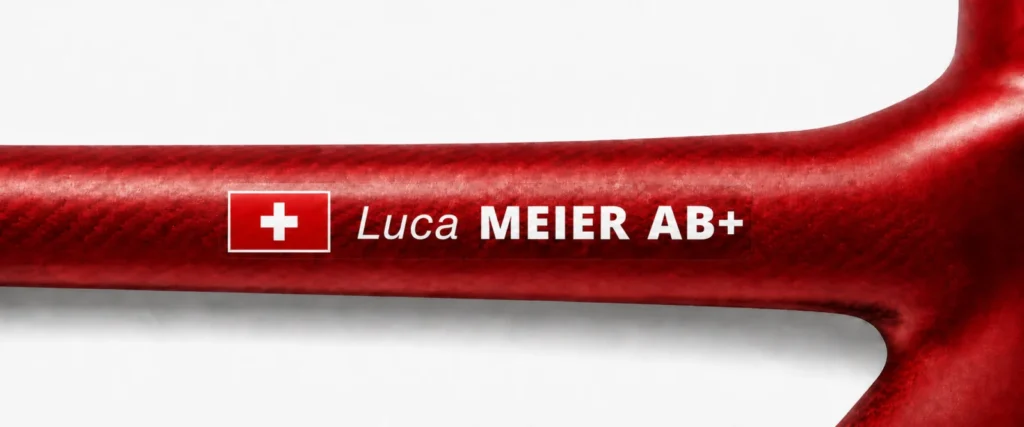
Once your upgrades are complete, a personalised detail can give the finished bicycle a distinctive, professional appearance without undoing your weight-saving work.
Pegatin creates custom name and flag stickers for bicycle frames for road, gravel, mountain and triathlon bikes.
If you want to compare the different styles and uses available, see our complete guide to custom bike decals.
Already have your design? Follow our instructions for applying and removing custom bicycle stickers correctly to achieve a clean finish and protect the surface of your bike.
Frequently asked questions
What is the cheapest way to make a bike lighter?
Remove accessories you do not use and review what you carry in your saddle bag. After that, tyres and inner tubes may offer relatively affordable savings, depending on the current setup.
What part should I upgrade first to make my bike lighter?
Start with unnecessary accessories, tyres and tubes. If your budget is larger, a lighter wheelset can provide a more noticeable change than replacing several small components.
How can I make my mountain bike lighter?
Use tyres appropriate for your terrain, consider a compatible tubeless setup and compare the weight of the wheels, crankset, saddle and finishing kit. Do not sacrifice casing strength, suspension performance or component durability merely to save weight.
Is a lighter bike always faster?
No. Weight matters most when climbing and accelerating. On flat terrain, aerodynamics, rolling resistance, riding position and fitness can be more important.
Are carbon components the best way to reduce bike weight?
Not always. Carbon can reduce weight, but design, quality, compatibility and intended use matter more than the material alone. A well-designed aluminium component may be lighter or more suitable than a low-quality carbon alternative.
How light should my bike be?
There is no ideal weight for every bicycle. The correct weight depends on its size, discipline, components, rider and intended use. Reliability and fit should take priority over reaching an arbitrary target.
Conclusion
The best way to make your bike lighter is to work methodically.
Begin by weighing the bicycle and removing unnecessary equipment. Then consider tyres, tubes and wheels before spending money on smaller components with a high cost per gram.
Every replacement must remain compatible with the bicycle and suitable for the way you ride. Do not sacrifice braking, durability, comfort or essential repair equipment simply to achieve a lower number.
A successful lightweight build is not the bicycle with the fewest grams. It is the bicycle that feels faster, more responsive and more enjoyable without becoming fragile or impractical.
Give your lighter bike the finishing touch
Personalize Your Bike Without Adding Unnecessary Weight
Once you’ve worked to make your bike lighter and cleaner, personalization doesn’t need to mean adding bulky accessories. A small custom name-and-flag sticker adds virtually no noticeable weight while giving your bike the same personal finishing touch seen on professional race bikes.
You have selected every component and removed every unnecessary gram. Now make the finished bicycle unmistakably yours with a personalised name and flag design from Pegatin.
Create your custom bicycle stickers
Give your bike a personalised finishing touch — use code PRODECALS for 15% off