La Marmotte Alpes 2027 is already one of the biggest targets on many cyclists’ calendars. Few one-day sportives combine this level of history, altitude, climbing and international atmosphere.
The event traditionally starts in Bourg d’Oisans and finishes after the 21 bends of Alpe d’Huez, with legendary Alpine passes in between. The likely 2027 date currently listed by local tourism sources is Sunday, June 27, 2027, but it has not yet been confirmed by the organiser.
Important: the 2027 date, route and entry conditions remain provisional. This guide separates confirmed event characteristics from details that still need official confirmation and will be updated when the organiser publishes the final 2027 information.
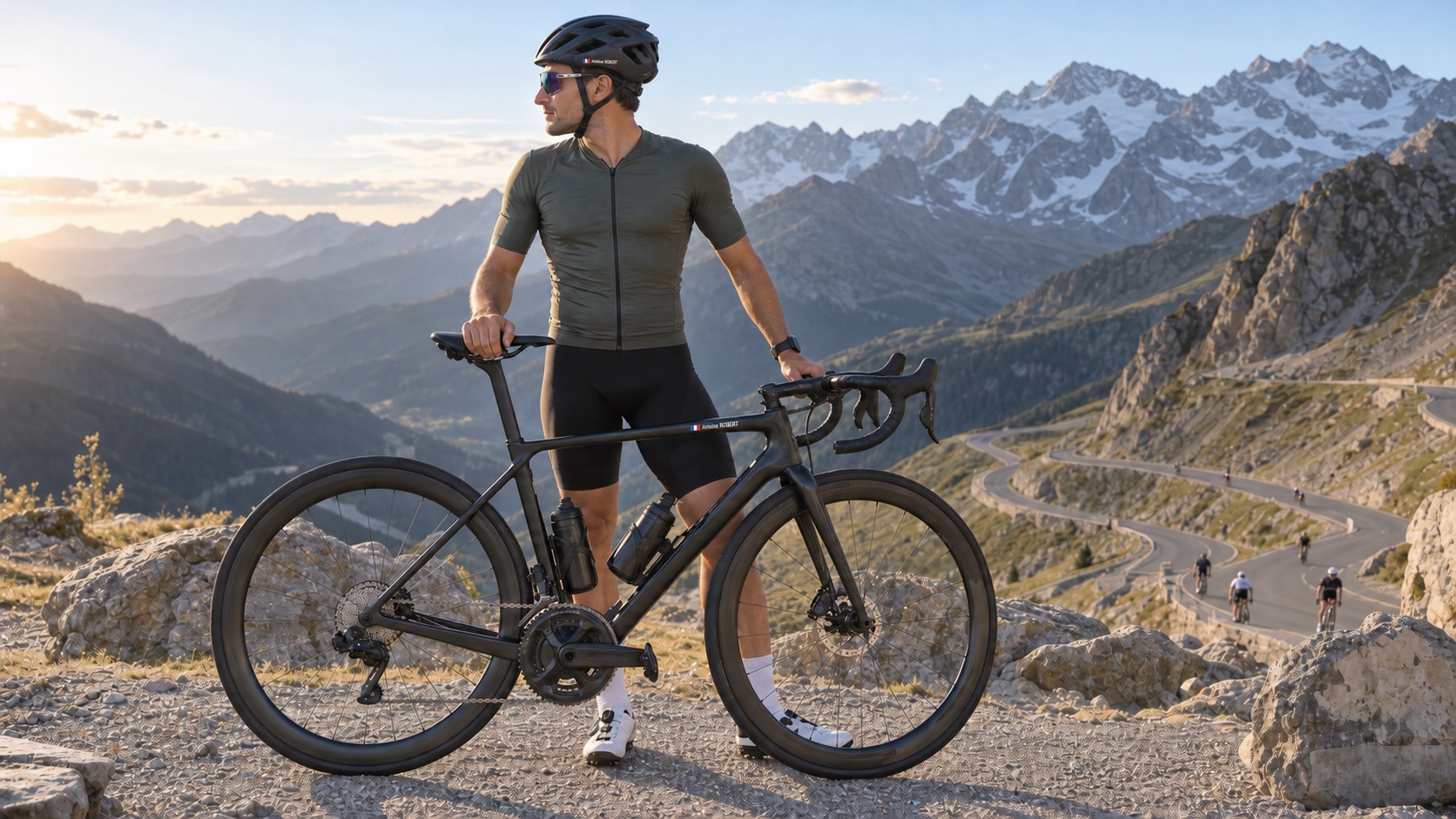
Your name. Your flag. Your Alpine challenge.
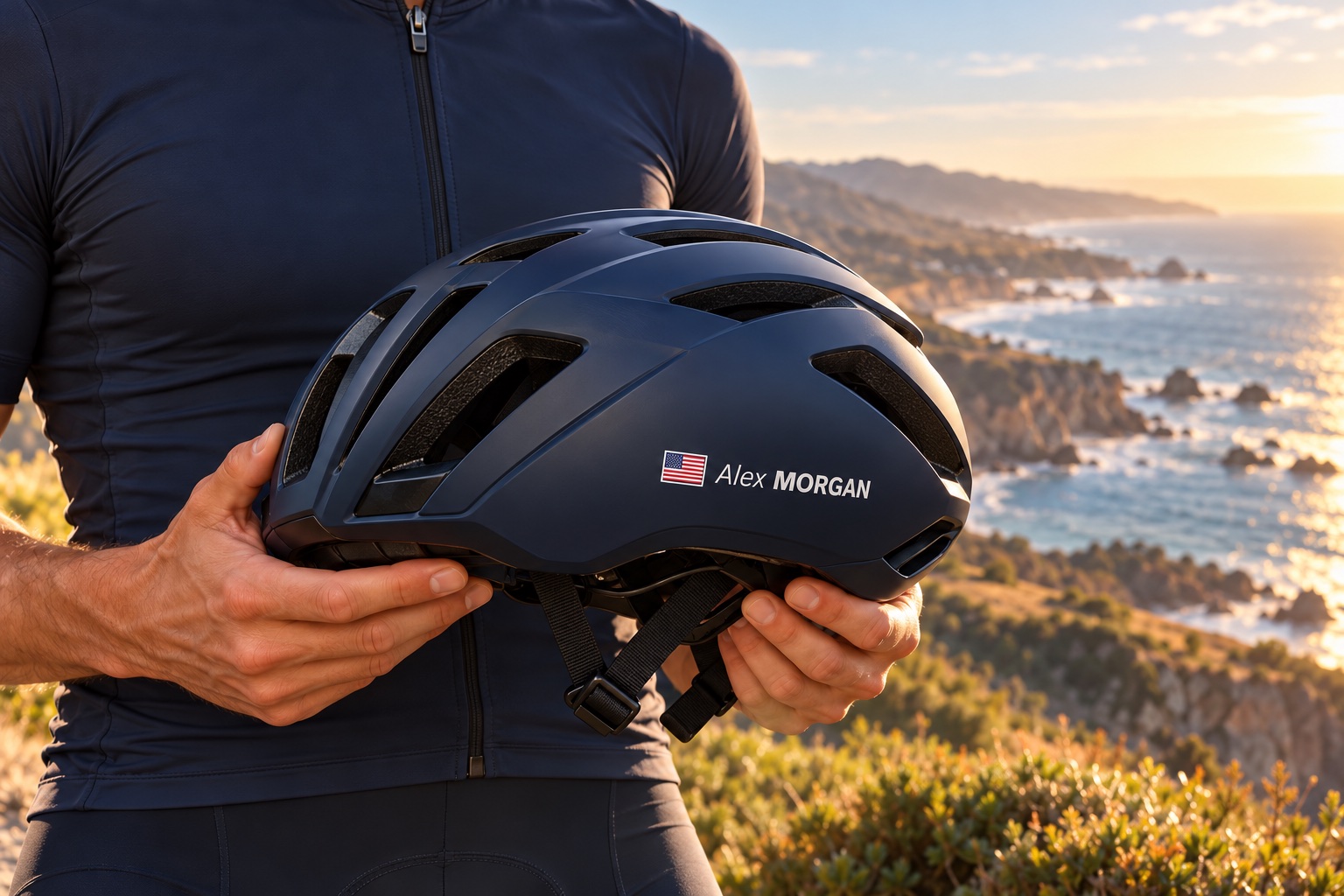
The Alpine roads are the challenge. Your name and flag are the finishing touch. Make your bike and helmet unmistakably yours.
Create my personalised packSave 15% with EVENT15
Free worldwide shipping.
La Marmotte Alpes 2027 Quick Facts
| Event | Marmotte Granfondo Alpes 2027 |
|---|---|
| Country | France |
| Provisional date | Sunday, June 27, 2027 — TBC |
| Traditional start | Bourg d’Oisans |
| Traditional finish | Alpe d’Huez |
| Current course reference | Approximately 177 km / 5,000 m climbing |
| Format | Timed mountain gran fondo on roads open to traffic |
| Registration | 2027 general entry details not yet officially published |
When Is La Marmotte Alpes 2027?
Alpe d’Huez currently lists June 27, 2027 as the expected date, while clearly marking it as “date to be confirmed”. The official Marmotte channels have not yet published a final 2027 announcement.
That distinction matters. International riders should avoid committing to non-refundable flights or accommodation until the organiser confirms the date. However, it is sensible to begin planning because rooms around Bourg d’Oisans and Alpe d’Huez can become scarce once entries open.
For definitive updates, check the official Marmotte Granfondo Alpes website. We will also update this guide as soon as the date, registration window and course are confirmed.
What Is La Marmotte Granfondo Alpes?
La Marmotte is one of Europe’s most famous mass-participation mountain cycling events. Its appeal is not based on a single climb. It comes from linking several giants of the French Alps into one enormous day and finishing on one of cycling’s most recognisable roads.
The current official course reference is 177 kilometres with around 5,000 metres of elevation gain. The traditional sequence includes the Col du Glandon, Col du Télégraphe, Col du Galibier, Col du Lautaret and the final ascent of Alpe d’Huez.
Those figures should be treated as the current event structure rather than guaranteed 2027 specifications. Mountain roads, safety requirements and organiser decisions can change the exact route.
The Marmotte Alpes Route and Major Climbs
Col du Glandon
After a relatively calm opening from Bourg d’Oisans, the Glandon introduces the real scale of the day. It is long, irregular and easy to ride too hard while the legs still feel fresh.
The descent is traditionally neutralised for timing because it is fast and technical. Riders still need to descend carefully, respect other participants and preserve concentration for the much bigger challenges ahead.
Col du Télégraphe
The Télégraphe begins the long transition from the Maurienne valley towards the Galibier. It may not be the highest climb of the day, but it is where poor pacing and inadequate fuelling often begin to show.
Ride below your limit here. The summit does not mean the main work is over.
Col du Galibier
The Galibier is the defining high-altitude challenge. Combined with the Télégraphe approach, riders face roughly 35 kilometres of sustained climbing and around 2,000 metres of ascent.
Weather can change quickly at altitude. A warm morning in Bourg d’Oisans does not guarantee comfortable conditions near the summit. Carrying a light windproof layer and having a clear nutrition plan are more valuable than saving a few grams.
Col du Lautaret and the Tunnels
The long descent towards Bourg d’Oisans offers some recovery, but it requires attention. The official event information warns that front and rear lights plus a high-visibility vest are mandatory because several tunnels have poor lighting.
Do not treat this as an optional recommendation. Final 2027 equipment rules must be checked before travelling.
Alpe d’Huez
The finish is reached through the famous 21 bends of Alpe d’Huez. The first ramps are especially steep, and they arrive after almost a full day of climbing.
This is why La Marmotte cannot be trained for by practising one fresh ascent. You need the ability to climb steadily when your legs are tired, your core temperature is high and your concentration has already been tested for hours.
Considering another French Alpine challenge? Compare the format with our L’Étape du Tour de France 2027 guide.
When Will Registration for Marmotte Alpes 2027 Open?
The organiser has not yet published the complete 2027 entry timetable. Specialist travel operators expect entries to open during autumn 2026, but that is not an official registration date.
The safest approach is to:
- follow the official event website and mailing list;
- prepare your rider account in advance;
- decide whether you want the one-day Granfondo or the two-day Rando format;
- avoid buying an unofficial entry from another rider, because transfers are normally prohibited;
- check the final medical documentation and insurance requirements before registration.
Demand is international and places can move quickly. Preparation now reduces the chance of making rushed travel or equipment decisions later.
How Difficult Is La Marmotte?
La Marmotte is a serious endurance event even for experienced cyclists. Around 177 kilometres would already be a long day; adding approximately 5,000 metres of climbing, altitude, long descents and changing weather turns it into a much bigger challenge.
The official course currently uses two important cut-offs: the summit of the Galibier and the foot of Alpe d’Huez. Exact 2027 cut-off times must be confirmed when the final regulations are released.
A successful rider needs more than a strong threshold power. You need:
- endurance for a day that may last eight to twelve hours;
- low enough gearing to climb efficiently while fatigued;
- a nutrition plan tested on long rides;
- safe descending skills;
- the discipline to ride the opening climbs conservatively;
- clothing for heat, cold, wind and possible rain;
- reliable lights and equipment for the tunnels.
How to Train for Marmotte Alpes 2027
Build endurance before intensity
Gradually extend your long rides until spending six or more hours on the bike is familiar. The objective is not to finish every session exhausted. Build repeatable volume and learn how your body responds over time.
Train climbing durability
Include days with several substantial climbs or indoor sessions that reproduce repeated sustained efforts. One excellent twenty-minute climb does not prepare you for the Galibier followed by Alpe d’Huez.
Practise fuelling from the first hour
Start eating early and consistently. Test carbohydrate intake, hydration and electrolytes during training. The nutrition plan that works for two hours may fail after eight.
Become a safer descender
Practise braking before corners, choosing a clean line and looking through turns. La Marmotte takes place on roads that are not completely closed to traffic, so control and judgement matter more than chasing seconds.
Arrive rested
Your last hard training cannot rescue months of insufficient preparation. Reduce fatigue during the final days, keep the legs moving and avoid untested equipment changes.
Bike Setup for La Marmotte Alpes
Reliability and sensible gearing should lead every decision.
- Use a compact or sub-compact chainset if that suits your ability.
- Select a cassette that gives you a genuinely comfortable climbing gear.
- Check brake pads, rotors or braking surfaces before the event.
- Inspect tyres for cuts and wear, then use a pressure already tested in the mountains.
- Service the drivetrain early enough to complete several test rides afterwards.
- Charge electronic shifting batteries, lights, GPS devices and power meters.
- Carry the repair essentials you know how to use.
- Test bottles, food storage and clothing before travelling.
Our bike sticker application and removal guide also explains how to prepare the frame surface correctly before adding personalised decals.
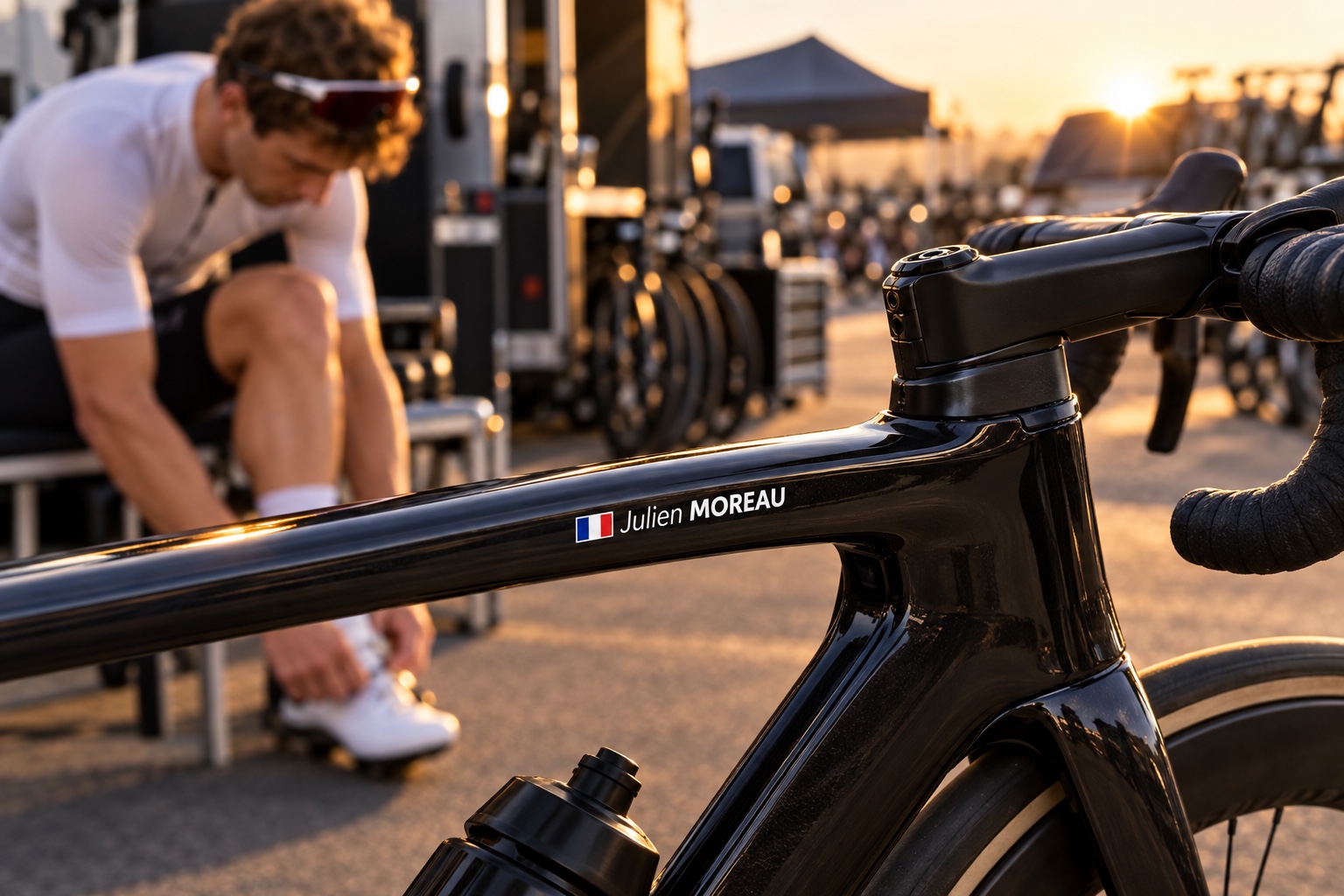
Your Name. Your Flag. On Your Bike.
Give your race bike a clean personalised PRO look before the Alps.
Make Your Bike Easier to Identify
La Marmotte brings thousands of road bikes into hotel storage rooms, transport areas, the event village and crowded start pens. Many frames, wheelsets and bags look almost identical.
A small personalised name-and-flag sticker gives the bike a distinctive professional detail without covering its design. The classic position is the top tube, where the rider’s first name, surname and national or regional flag remain visible but discreet.
Explore our bike frame name and flag sticker guide and learn why professional cyclists use name and flag decals.
La Marmotte or L’Étape du Tour?
Both are iconic French mountain events, but the experience is different.
Choose La Marmotte if you want a fixed Alpine identity, a finish on Alpe d’Huez and a course built around the classic Glandon–Télégraphe–Galibier sequence.
Choose L’Étape if riding an actual Tour de France stage on closed roads is the priority and you are comfortable waiting for a route that changes every year.
For more options, use our 2027 cycling events calendar or compare La Marmotte with the Maratona dles Dolomites 2027 and Nove Colli 2027.
Marmotte Alpes 2027 Checklist
- Confirm the official date before booking non-refundable travel.
- Register only through the organiser or an authorised travel partner.
- Check the final 2027 route, rules and cut-off times.
- Complete the required medical or health documentation.
- Prepare front and rear lights plus the required visibility equipment.
- Choose gearing for Alpe d’Huez after many hours, not for the first climb.
- Service and test the bike well before travel.
- Practise nutrition and mountain clothing choices.
- Label the bike and equipment so they are easy to recognise.
Frequently Asked Questions
When is Marmotte Alpes 2027?
Sunday, June 27, 2027 is the provisional date currently shown by local tourism sources. The organiser has not yet confirmed it, so treat the date as TBC.
How long is La Marmotte?
The current official course reference is approximately 177 km with around 5,000 metres of climbing. The final 2027 route may change.
Where does La Marmotte start and finish?
The traditional event starts in Bourg d’Oisans and finishes at Alpe d’Huez.
Is La Marmotte harder than L’Étape du Tour?
It depends on the L’Étape route selected for that year. La Marmotte’s current 177 km and 5,000 m profile makes it an exceptionally difficult benchmark, while L’Étape changes with the Tour de France route.
Are lights mandatory?
Current official Marmotte information requires front and rear lighting plus a visibility vest because of poorly lit tunnels. Check the final 2027 rules before travelling.
Is registration open?
The full 2027 general registration timetable has not yet been officially published. Follow the organiser and prepare to act when entries open.
Preparing for the French Alps?
Personalise your bike with your name and flag at Pegatin.com →
Order personalised stickers early enough to allow for production and delivery before travelling to the event.
Personalise your bike for your next event — use code EVENT15 for 15% off