Major sportives such as Quebrantahuesos, the Ardéchoise and L’Étape du Tour bring large groups of riders together. Entry limits vary by edition, so check the organiser’s current information before planning your trip.
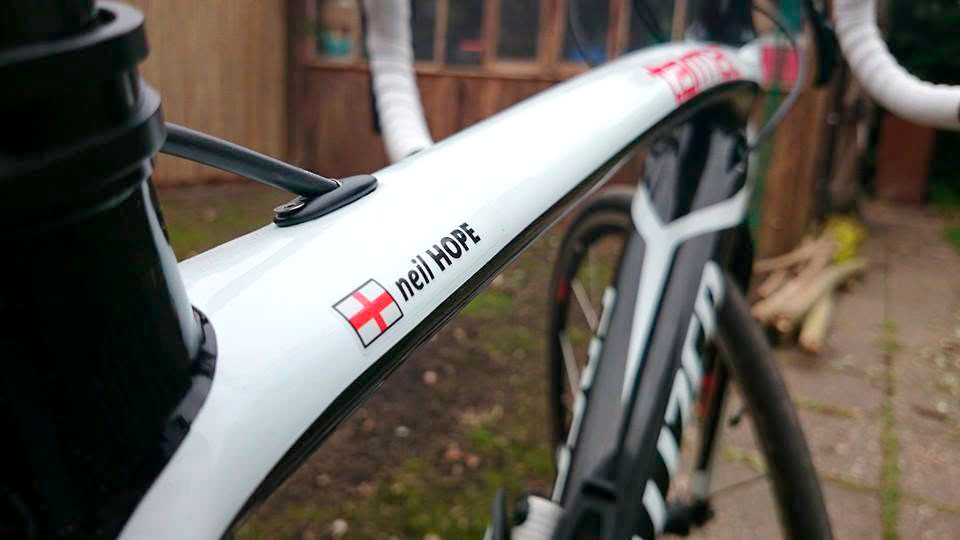
On event day, you may park your bike beside many similar models. Riders often share the same frame colour and team kit. A name-and-flag sticker adds a personal detail that helps you recognise your equipment.
Personalise your bike for your next event — use code EVENT15 for 15% off
The moment it actually matters
Training prep gets most of the attention before a big sportive — the long rides, the nutrition plan, the gear list. The bike-among-a-thousand-bikes problem doesn’t come up until you’re standing in it.
The bag drop. Riders often leave bikes nearby while collecting bags or taking a break. When you return, a visible name helps distinguish your bike from similar frames. It does not replace a lock or secure storage.
The mechanical support tent. Several bikes may await repairs at once. A name on the top tube helps you explain which bike is yours. Always confirm ownership with the mechanic before collecting it.
The finish area. After a long ride, fatigue makes small details harder to spot. A distinctive name-and-flag design gives you another visual reference when collecting your bike.
Photos. A readable name can add a personal touch to close-up event photographs. For official galleries, your race number remains the more useful search reference.
Make your bike easier to identify and give it a clean professional look.
The pro-look factor
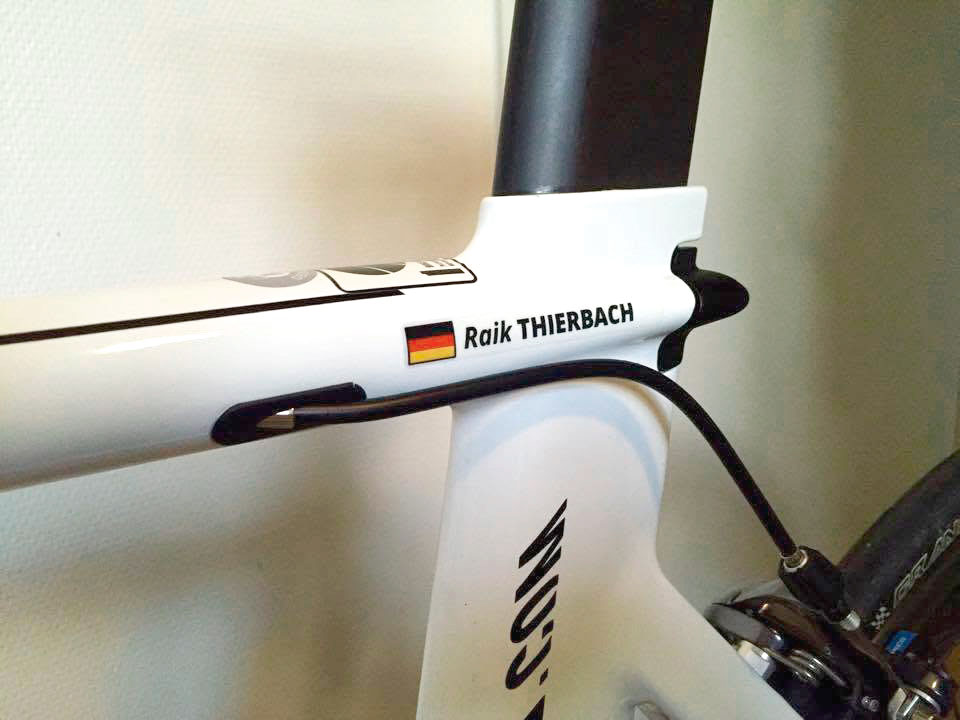
There’s a second reason that has nothing to do with losing your bike: events like these are, for one day, as close as most of us get to living the pro peloton experience. Depending on the event, there may be road closures, timing chips, feed stations and rider numbers. Check the organiser’s current arrangements. A name-and-flag decal adds a finishing detail to your own bike. Name on the top tube, flag beside it, exactly like the field you’re briefly riding among.
It’s a small thing, but on a start line with thousands of riders in club and brand kit, it’s one of the few details that’s genuinely yours.
If you’re riding with a club
Gran fondos are often a club trip as much as an individual one — a minibus, a rental house, a dozen riders from the same club lining up together. If that’s you, a matching set across the group does double duty: it looks sharp at the start line photo, and it makes spotting a teammate’s bike in a packed bag-drop area faster for everyone, not just you. Our guide on ordering matching stickers for a club or team covers how to coordinate a group order.
Worth thinking about for the distance, too
Long sportives can take you far from home. A name on your bike can help you recognise your equipment; an optional contact is personal information, not medical identification or a guarantee of emergency assistance. For helmet stickers, check the manufacturer’s adhesive guidance and keep vents and safety labels clear. We cover this properly in our guide on why your name belongs on your bike and helmet.
Getting it done before race week
The one thing worth planning around: don’t leave this until the week of the event. A quality sticker needs a clean, dry surface and time for careful application. Apply it before packing your bike, rather than rushing the night before departure. Sort it a few weeks out, while the bike is still on your home workstand.
If you’re applying it for the first time, our full walkthrough covers exactly how: how to correctly apply or remove a bike sticker.
Frequently asked questions
Does it need to survive a full gran fondo distance — heat, sweat, rain? Choose a decal suited to outdoor use, and follow the application and care instructions. Weather, surface condition and wear affect results; no sticker has unlimited durability. Learn about the materials and protective layers in our guide to what’s actually inside a quality bike sticker.
Will it survive being racked and unracked all day at feed stations? Careful application helps, but rubbing against racks or other bikes can still damage a decal or lift an edge. Avoid contact with the sticker area and inspect it after handling.
What if I’m riding a rental or borrowed bike for the event? We’d only recommend applying a sticker to a bike you own, since it’s designed as a longer-term addition rather than a one-event application.
Is this worth doing for a smaller local sportive too, not just the huge ones? Absolutely — the identification problem scales down as well as up. Even a 500-rider local event has enough similar bikes in the car park to make a name sticker useful.
Can I add a flag that isn’t my home country — say, where the event is being held? Yes, riders do this often for events abroad. See our guide to choosing your flag for combined and regional options.
One detail, sorted well before the start line
Whichever event’s on your calendar — Quebrantahuesos, Titan Desert, the Étape, or a local club sportive with a fraction of the field — a name-and-flag decal adds a personal reference that can help you recognise your bike among similar models, along with a touch of the pro-peloton look. It does not replace secure storage or ownership checks.
If you are personalising a bike for a sportive or gran fondo, compare the season’s major rides in our 2027 cycling events calendar.
Personalise your bike for your next event — use code EVENT15 for 15% off
Order well before your ride or event: production and delivery take time. Check the current estimate for your destination.