The Vuelta a España is the youngest of cycling’s three Grand Tours, but its steep climbs, late-season racing and distinctive red leader’s jersey have made it one of the sport’s essential events. This guide explains its origins, classifications and how the race has evolved.
Updated August 2026: the 2026 edition runs from 22 August to 13 September over 21 stages and approximately 3,275 km. Route details can change, so check the official La Vuelta route before planning travel.
How did the Vuelta a España begin?
Something that we have to say, and as a matter of fact, is quite interesting. Is the fact of how these races started. The Tour de France and the Giro d’Italia share the same aspect. And it’s the fact that the Vuelta a España was organized by a newspaper.
The youngest of the three Grand Tours first appeared in the world more than 20 years after the Tour de France became one of the most important races in Europe. But that doesn’t mean the race has less importance than the other Grand Tours.
The idea of the tour was given by Juan Pujol and Clemente Lopez. Pujol was the director of the newspaper Informaciones, and thanks to them, the Vuelta a España became a thing during the early ’30s.
The very first edition of the race took place in 1935, and it was divided into 14 different stages. More than we were used to seeing in the other Grand Tours. But, shortly after it became an important race, the Vuelta a España was suspended on different occasions due to delicate situations taking place in Spain. Nonetheless, it didn’t stop it to become a Grand Tour race as the years passed by.
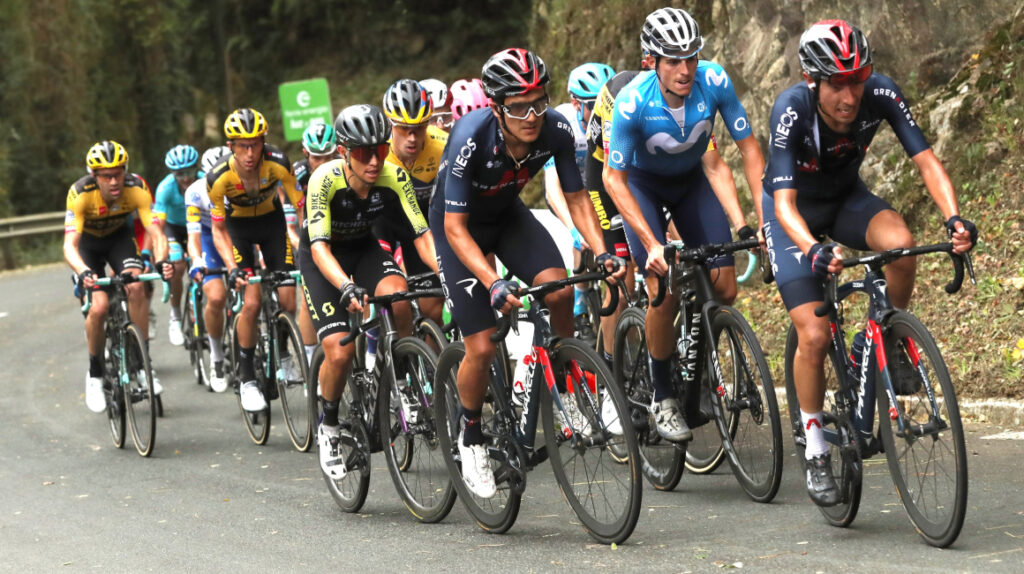
How has the tour changed?
Things change, and when talking about something that’s nearly a hundred years old, we can’t miss the chance to spot some major changes.
In the beginning, the race only had 14 stages. It was more than the usual stages in other races, but it has evolved a lot nowadays. People can see that in later tours, it evolved and now the Vuelta has 21 stages.
Something that is shared with the other Grand Tours is the fact that the race has started abroad on some occasions. But, not as much as the other tours. The Vuelta has only started in other countries in three different years. Also, different from the Giro d’Italia the Vuelta a España does not have a prologue as sometimes it is called.
Make your bike easier to identify and give it a clean professional look.
Classifications in the Vuelta a España
The classifications in the Grand Tours don’t change a lot. The system is basically the same in all of them. And so far it has proven to be a pretty accurate system for those who might wonder how it works.
Also, similar to the other Grand Tours, the Vuelta a España has four different classifications. Points, mountains, young riders, and, the most important one, the general classification.
Just like the other Grand Tours, cyclists participating in the Vuelta a España have the chance to wear a special jersey depending on their performance in the race. This is something that can be also seen in the Tour de France and the Giro d’Italia, but with different colors.
How often does the Vuelta a España take place?
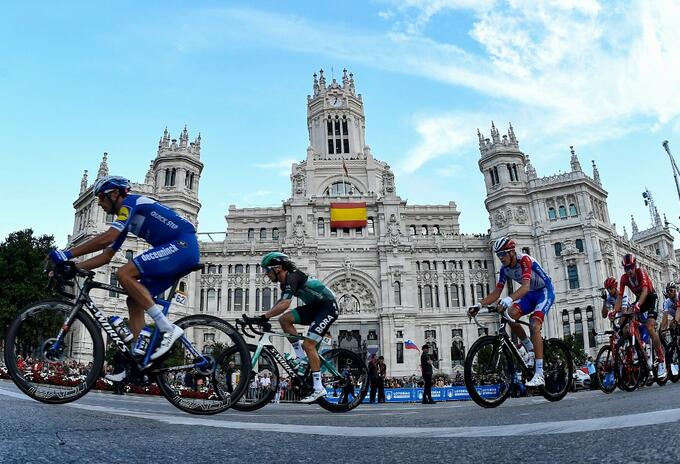
Just like the rest of the Grand Tours, the Vuelta a España is held once per year. But on a different date so it won’t collide with the schedule of the other races.
The Vuelta a España is normally held in late summer. In 2026 it is scheduled from 22 August to 13 September, with a varied route that includes flat, hilly, mountain and individual time-trial stages. Because dates, stage profiles and participating riders can change, use the official race website for the latest practical information.
Following the Vuelta a España
Use this guide as an introduction, then explore our cycling events guides and practical advice on personalising your bike for a gran fondo. If you attend or ride an event, a clear name-and-flag sticker also helps identify your bike and equipment.
Tour de France: The oldest Grand Tour
Giro d’Italia: Over 100 hundred years of history

Egan Bernal: A promising cycling career
A glimpse into the life of Mario Cipollini
Angliru: A dream for Spanish and International Cyclists
Give your bike a personalised finishing touch — use code PRODECALS for 15% off