The Fred Whitton Challenge 2027 is one of the toughest and most famous cycling sportives in the UK.
Taking riders through the spectacular Lake District, the event combines around 112 miles (180 km) of riding with a succession of notoriously difficult climbs.
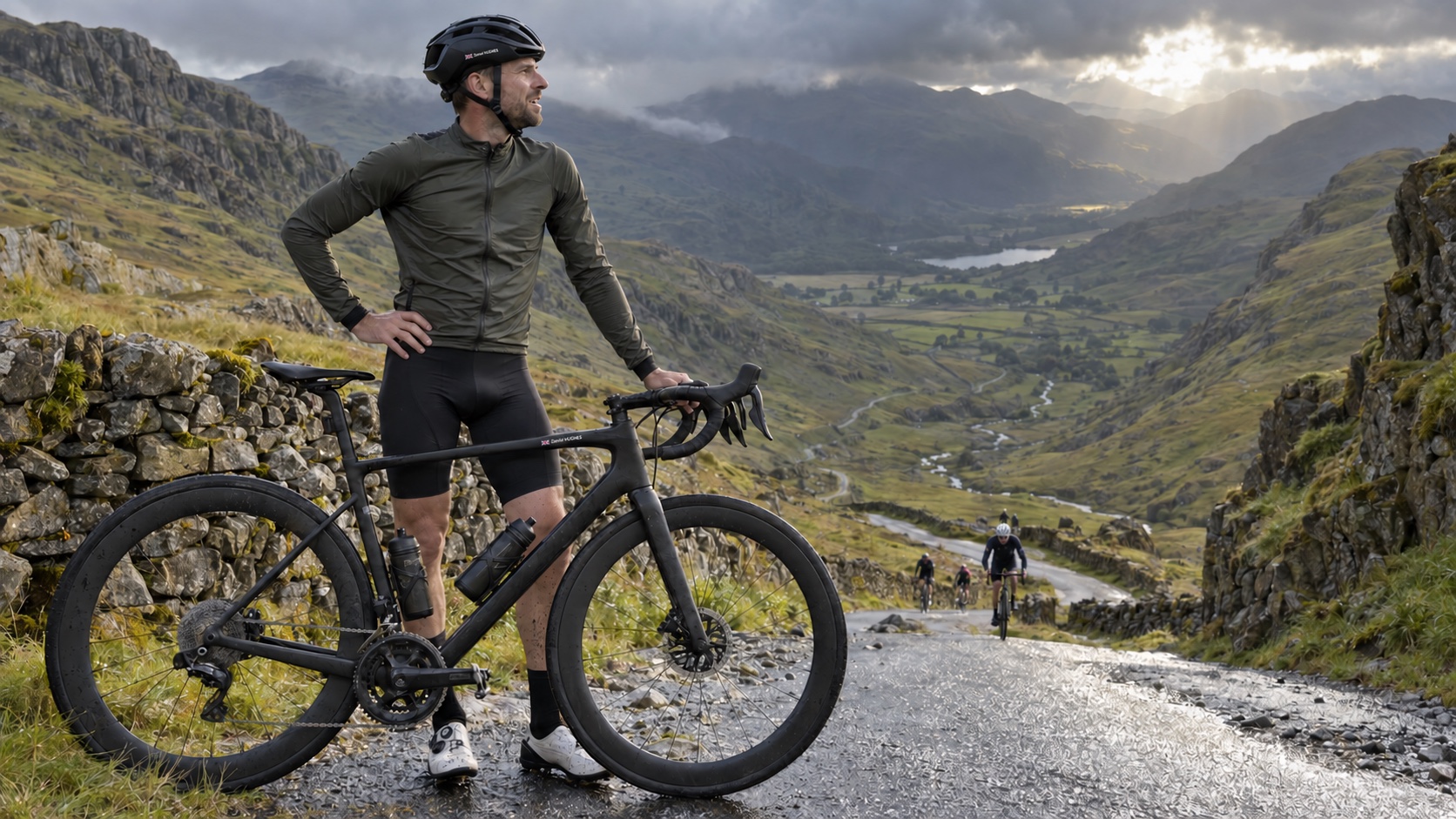
Your name. Your flag. Your next challenge.
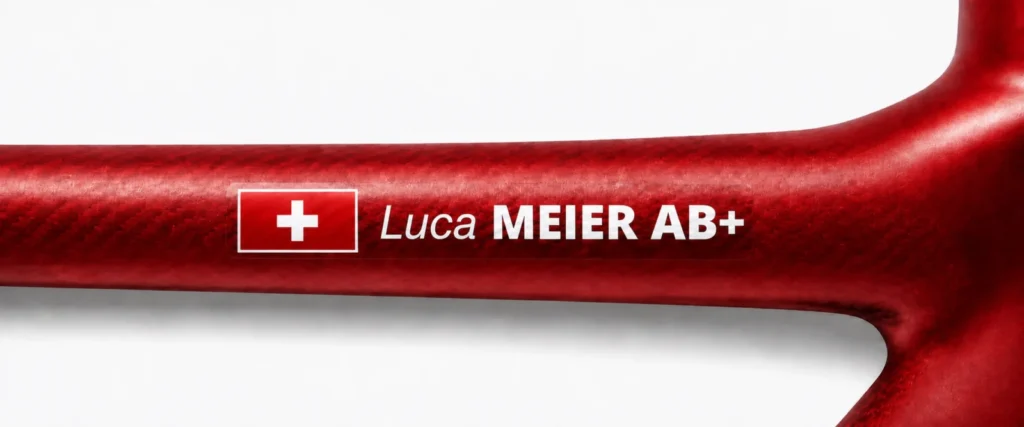
Personalise the bike taking you into the Lake District.
Save 15% with EVENT15.
The 2027 edition is scheduled for Sunday, 9 May 2027, starting and finishing in Grasmere, Cumbria. visiteden.co.uk
But completing the Fred Whitton is about much more than having enough fitness to ride 180 kilometres. Gearing, pacing, braking, nutrition and bike preparation can make the difference between surviving the final climbs and enjoying one of Britain’s great cycling challenges.
This guide explains what to expect and how to prepare your bike and equipment for the Fred Whitton Challenge.
Fred Whitton Challenge 2027: Key Information
The Fred Whitton Challenge 2027 is scheduled for Sunday, 9 May 2027, with the event starting and finishing in Grasmere in the Lake District. visiteden.co.uk
The traditional challenge covers approximately 112 miles / 180 kilometres through some of the Lake District’s most demanding terrain.
The route is famous for linking climbs including Kirkstone, Honister, Newlands, Whinlatter, Hardknott and Wrynose, before returning towards Grasmere. visiteden.co.uk
The 2026 event temporarily used The Struggle instead of the normal approach to Kirkstone because of a landslip. Organisers indicated that the intention was to return to the usual route in 2027. Sportive.com
For final route, entry and event information, always check the official Fred Whitton Challenge website before travelling.
Why Is the Fred Whitton Challenge So Hard?
Distance alone doesn’t explain the reputation of the Fred Whitton.
The difficulty comes from combining a very long day in the saddle with repeated steep climbs and demanding Lake District roads.
More importantly, some of the hardest terrain arrives when riders already have many hours of cycling in their legs.
That changes how you need to approach the event.
Riding aggressively during the first half can feel surprisingly easy. Paying for that effort when you reach the final major climbs is another matter entirely.
The Fred rewards patience, sensible gearing and disciplined pacing.
Fred Whitton Challenge Route and Climbs
The classic route creates a tour of some of the most celebrated road cycling climbs in the Lake District.
Kirkstone Pass
Traditionally one of the major early challenges, Kirkstone introduces riders to the climbing that will define the rest of the day.
At this stage it can be tempting to follow faster groups or push harder than necessary.
Resist that temptation.
There is an enormous amount of riding still to come.
Honister Pass
Honister is one of the defining climbs of the route, with steep sections and spectacular Lake District scenery.
By this point, maintaining a controlled effort becomes increasingly important.
Newlands Pass
Newlands adds another substantial climbing effort before riders have had much opportunity to recover from the previous terrain.
Smooth pacing is far more valuable here than attacking every gradient.
Whinlatter Pass
Whinlatter continues the accumulation of climbing and fatigue.
At this point, riders who have eaten and drunk consistently often begin to notice the advantage over those who neglected nutrition earlier in the ride.
Hardknott Pass
Then comes the climb most riders associate with the Fred Whitton Challenge: Hardknott Pass.
Its reputation is deserved.
Hardknott contains exceptionally steep gradients and appears very late in the challenge, when riders already have considerable fatigue in their legs.
This is exactly why gearing choice matters so much.
Your objective isn’t to have impressive gearing in the car park at Grasmere.
It’s to have gearing you can still turn when you reach Hardknott.
Wrynose Pass
Getting over Hardknott doesn’t mean the climbing is finished.
Wrynose follows, creating another serious test before the final part of the journey back towards Grasmere.
The combination of Hardknott and Wrynose late in such a long sportive is one of the characteristics that makes the Fred Whitton unique.
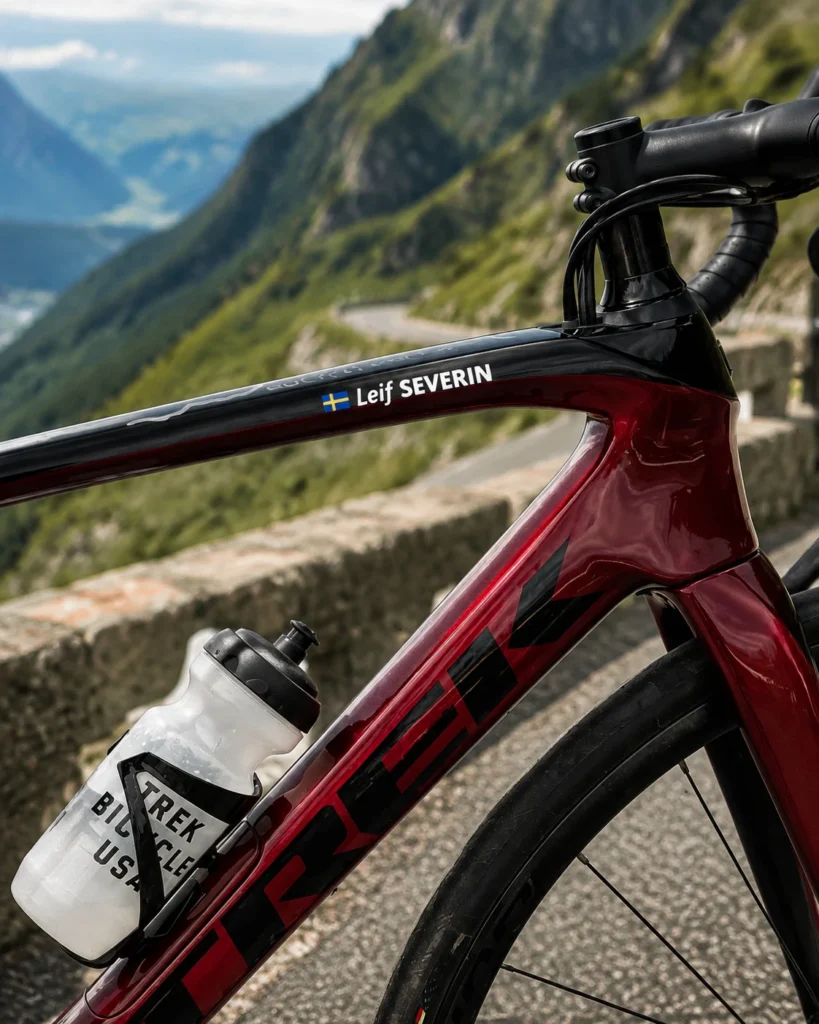
Choosing the Right Gearing for the Fred Whitton
For most amateur cyclists, lower gearing is a sensible choice for this event.
Even a rider capable of climbing steep gradients comfortably during a short training ride can have a completely different experience after many hours in the saddle.
Your lowest gear should allow you to keep turning the pedals when fatigue is high.
Don’t choose gearing based solely on your strongest training ride.
Choose it for the rider you will be near the end of a 180 km mountain sportive.
Bike Setup for the Fred Whitton Challenge
Reliability and control should take priority over marginal performance gains.
Check Your Brakes
The Lake District doesn’t only provide difficult climbs.
What goes up must come down.
Steep descents mean your brakes need to be in excellent condition.
Check pads, rotors or braking surfaces well before the event and make sure you are completely comfortable with the braking performance of your bike.
Inspect Your Tyres
Start with tyres you trust.
Inspect them for cuts, excessive wear or other damage and avoid making an untested tyre or pressure change immediately before the event.
Check the Drivetrain
A poorly adjusted drivetrain is annoying on a normal ride.
During the Fred Whitton, it can become a serious problem.
Check your chain, cassette, derailleurs and shifting before travelling to Grasmere.
Test Everything Before Event Day
If you service your bike before the event, ride it afterwards.
Don’t collect a freshly serviced bike and make the Fred Whitton its first proper test.
Training for the Fred Whitton Challenge
You need more than the ability to produce high power for short periods.
The Fred demands endurance and climbing durability.
Build Long-Ride Endurance
Progressively increase the duration of your longer rides.
You need to know what happens to your position, nutrition, concentration and comfort after several hours.
Include Repeated Climbs
One big climb followed by an easy ride home doesn’t fully reproduce the demands of the Fred.
Training rides containing several substantial climbs can help you become comfortable producing climbing efforts repeatedly.
Practise Steep Gradients
If possible, include some genuinely steep roads in your training.
You need to know how your gearing feels when cadence drops and whether you are comfortable climbing both seated and standing.
Practise Descending
Descending is a skill.
Practise braking before corners, looking through turns and remaining relaxed on the bike.
Never use an event like the Fred Whitton as the first place you attempt to develop technical descending skills.
Nutrition: Start Eating Before You Feel Empty
A challenge this long requires a nutrition strategy that begins early.
Don’t wait until you feel hungry.
Use your training rides to establish which foods and drinks your stomach tolerates over many hours and create a routine you can repeat during the event.
The objective is simple: arrive at the later climbs with energy still available.
Hardknott is not where you want to discover that you stopped eating two hours earlier.
Personalising Your Bike for the Fred Whitton Challenge
Thousands of cyclists take part in major sportives with very similar road bikes, helmets and equipment.
A small personalised detail can make your bike unmistakably yours.
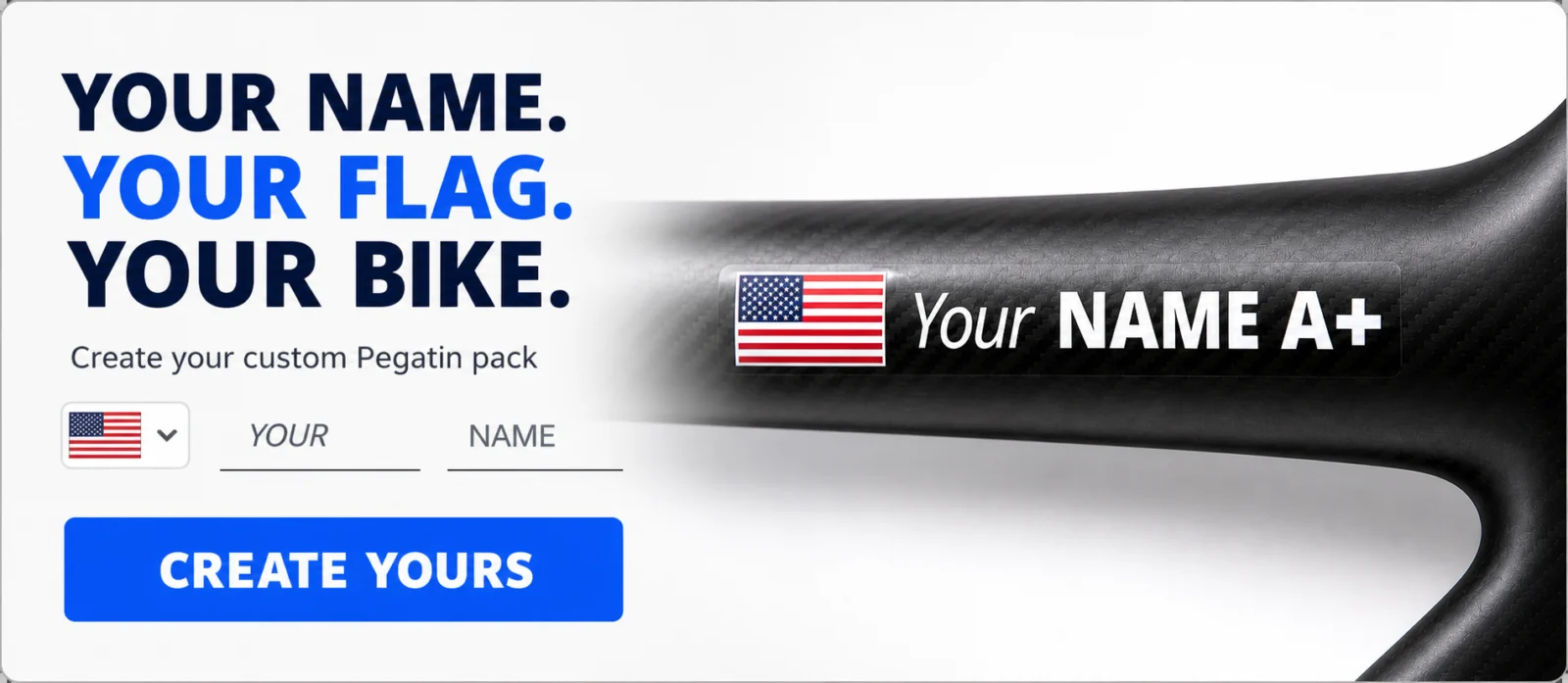
A custom name-and-flag sticker on the top tube recreates one of the most recognisable details seen on professional race bikes without covering the frame with large graphics.
Pegatin creates personalised cycling stickers using your first name, surname and national or regional flag.
They’re designed to integrate cleanly with the bike and create the personalised PRO look associated with professional racing.
Learn more about bike name stickers or discover why professional cyclists put their name and flag on the top tube.
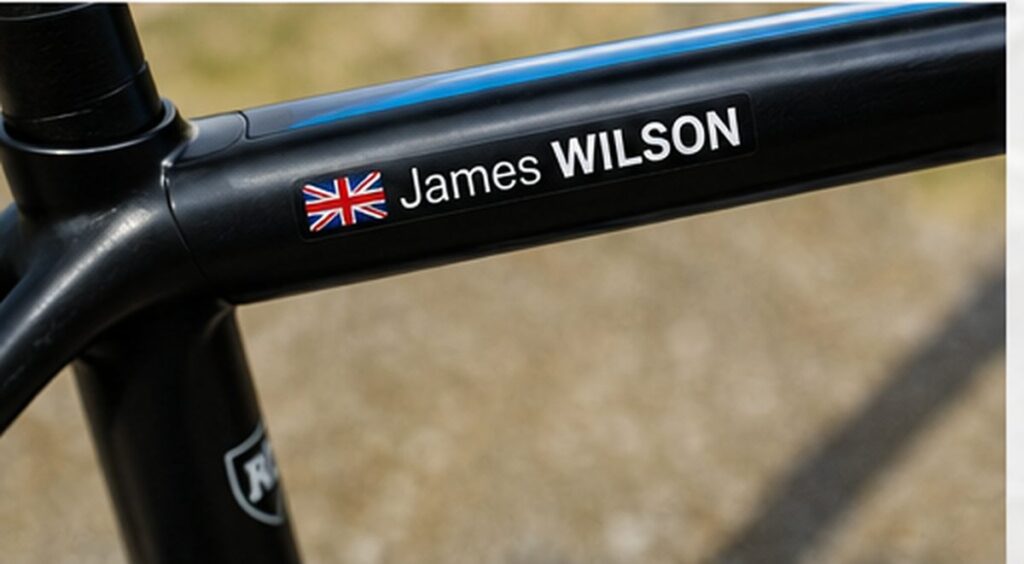
Where to Put Your Name Sticker
The top tube is the classic location.
It keeps the sticker visible while reproducing the clean personalised appearance associated with professional race bikes.
You can see more examples and placement ideas in our guide to bike frame name and flag stickers.
Another option is the helmet, provided the helmet manufacturer permits adhesive decals on the particular model.
See our guide to personalised bike helmet stickers for more information.
Before installing anything, clean the surface correctly. Our bike sticker application and removal guide explains how.
Make your bike easier to identify and give it a clean professional look.
Fred Whitton Challenge Bike Checklist
Before travelling to Grasmere, check:
- Bike serviced and subsequently test ridden
- Low gearing suitable for very steep gradients
- Brake pads and braking surfaces in excellent condition
- Tyres inspected
- Drivetrain running smoothly
- Electronic shifting batteries charged
- Repair kit prepared
- Nutrition tested during long rides
- Bottles and hydration strategy ready
- Clothing prepared for changing Lake District weather
- Helmet and shoes checked
- Event and travel arrangements confirmed
- Personalised name-and-flag stickers applied
The Final Week Before the Fred Whitton
The final week isn’t the time to prove how fit you are.
The important training has already been completed.
Concentrate on arriving rested, organise your equipment and avoid unnecessary last-minute changes.
Check the bike, prepare your clothing and nutrition, and make sure everything you intend to use has already been tested.
Then prepare yourself for a very long day in one of Britain’s most spectacular cycling landscapes.
Make Your Bike Yours for the Fred Whitton Challenge
The Fred Whitton Challenge is the kind of event cyclists remember for years.
Months of training eventually lead to one morning in Grasmere and one bike that has to carry you across some of the toughest roads in the Lake District.
Make that bike yours.
Add your name. Add your flag. Get the PRO look.
Planning more rides next season? Explore our 2027 cycling events calendar to discover the best gran fondos and sportives around the world.
Personalise your bike for your next event — use code EVENT15 for 15% off
Order your Pegatin well before travelling: production and delivery take time. Check current delivery estimates for your destination.