The RBC GranFondo Whistler is one of North America’s most spectacular cycling events, taking riders from Vancouver to Whistler through the mountains and coastal landscapes of British Columbia.
The main Gran Fondo follows a 122 km journey from Stanley Park in Vancouver to Whistler Village, using the famous Sea-to-Sky corridor.
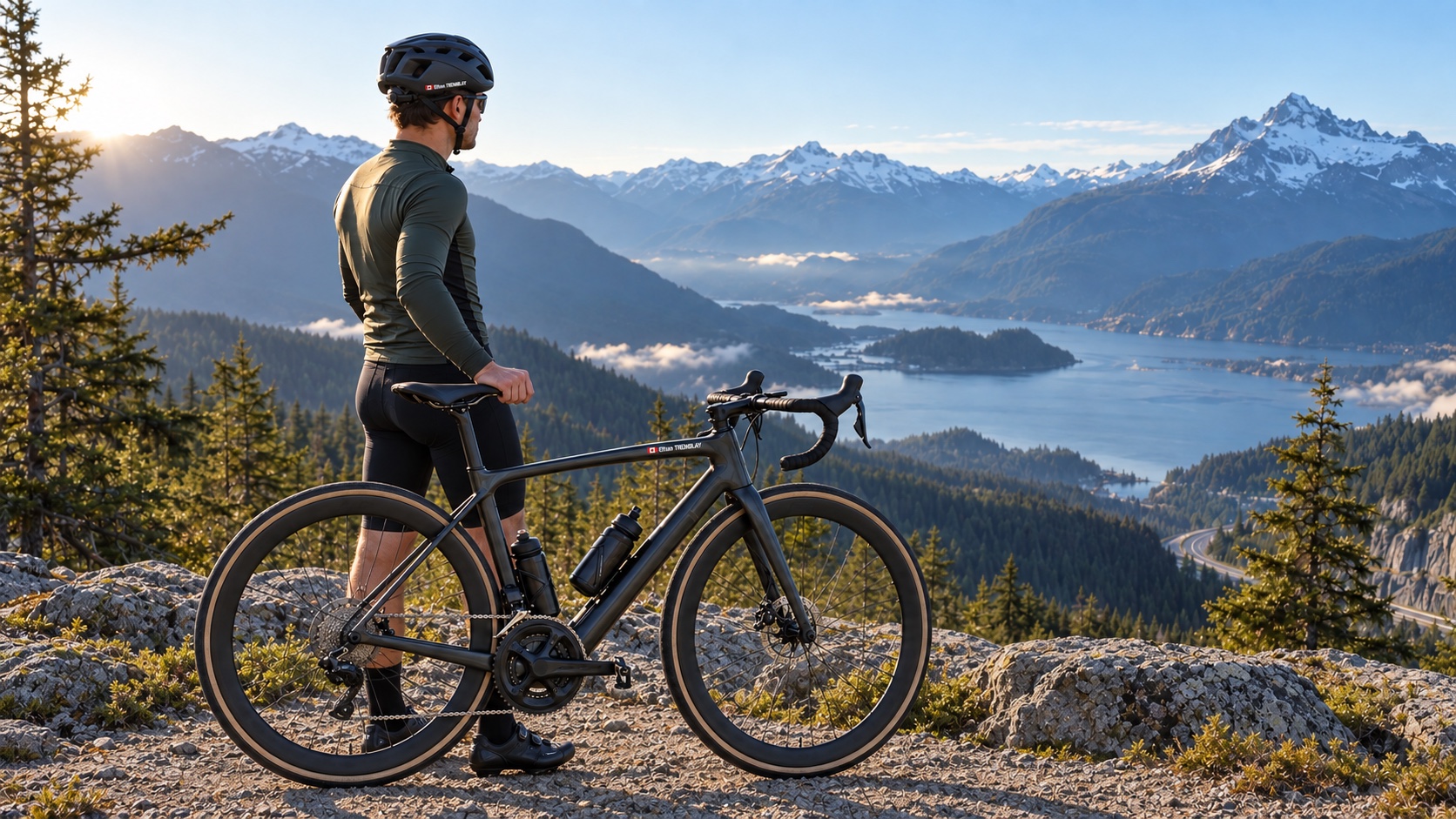
Thousands of cyclists take part, enjoying the unusual experience of riding this iconic route with a dedicated traffic-free lane and extensive event support. The organisers describe RBC GranFondo Whistler as North America’s largest Gran Fondo. rbcgranfondo.com
But the scenery shouldn’t disguise the challenge.
The route gradually gains elevation towards Whistler, and riders need enough endurance to remain comfortable and efficient after several hours in the saddle.
This guide covers the route options, training, bike setup, nutrition and equipment you should consider when preparing for GranFondo Whistler.

RBC GranFondo Whistler: Key Information
RBC GranFondo Whistler traditionally takes place in September, connecting Vancouver and Whistler in British Columbia.
The organiser has announced Saturday, September 11, 2027 and opened registration in its official 2027 announcement. Some practical pages still display the 2026 schedule. Check the current registration terms and final rider guide before booking travel; the launch-price offer mentioned in the announcement ended on September 16, 2026.
The published 2026 route references describe three distance options. Use these to plan your preparation, then check the final 2027 routes, elevation, start locations and cut-offs:
Medio — 55 km
Gran Fondo — 122 km
Forte — 146 km
The main Gran Fondo starts at Stanley Park in Vancouver and finishes in Whistler Village. rbcgranfondo.com
You can find current event information on the official RBC GranFondo Whistler website.
What Makes GranFondo Whistler Special?
There are plenty of long cycling events, but few combine a major city start with scenery like the Sea-to-Sky corridor.
Riders leave Vancouver, cross the Lions Gate Bridge and continue north towards Whistler.
The journey follows the dramatic coastline of Howe Sound before moving deeper into the mountains towards the finish.
For one day, cyclists get an experience of the Sea-to-Sky Highway that would be impossible during a normal training ride.
The organisation provides rider support including aid stations, mechanical assistance, medical support, timing and sweep vehicles. rbcgranfondo.com
Gran Fondo — 122 km
For most riders, the 122 km Gran Fondo is the defining Whistler experience.
It starts in Stanley Park before travelling north along the Sea-to-Sky Highway and finishing in Whistler.
The distance itself is achievable for a well-prepared amateur cyclist, but looking only at the kilometres can underestimate the challenge.
The course gradually takes riders from sea level towards the mountains, meaning that efficient pacing becomes increasingly important as the ride progresses.
The objective isn’t to arrive at the first climbs feeling strong.
It’s to arrive in Whistler feeling strong.
Forte — 146 km
For riders looking for a considerably harder challenge, there is Forte.
The current Forte course covers approximately 146 km with 2,712 metres of elevation, adding the climb towards Callaghan before reconnecting with the main Gran Fondo route towards Whistler. Participation is limited compared with the main event. rbcgranfondo.com
Those additional kilometres fundamentally change the challenge.
Forte riders need greater climbing endurance and should pay particular attention to gearing, nutrition and pacing.
Medio — 55 km
The 55 km Medio provides a more accessible introduction to the Gran Fondo experience.
Unlike the main Vancouver-to-Whistler route, Medio starts in Whistler, heads south along the Sea-to-Sky corridor and incorporates the Callaghan Valley before returning towards Whistler.
The current route includes around 800 metres of elevation and is designed to accommodate riders with a broader range of experience. rbcgranfondo.com
It can be an excellent option for someone tackling their first organised cycling challenge.
How to Train for GranFondo Whistler
Your preparation should focus on endurance rather than simply accumulating kilometres.
Build Your Long Rides Gradually
Increase the duration of your longer rides progressively.
You need to understand how your body responds after three, four or more hours on the bike.
Long rides also expose problems that shorter training sessions can hide: saddle discomfort, poor nutrition timing, inappropriate clothing or a bike position that becomes uncomfortable over time.
Include Sustained Climbing
GranFondo Whistler isn’t a flat 122 km sportive.
Include sustained climbing efforts in your preparation.
If long climbs aren’t available where you live, structured indoor sessions can reproduce some of the physiological demands.
Practise Group Riding
Large cycling events involve riding around many other cyclists.
Become comfortable holding a predictable line, communicating and maintaining awareness of the riders around you.
The official event itself runs Gran Fondo training clinics that include group-riding skills as part of preparation. News from RBC GranFondo
Bike Setup for GranFondo Whistler
The best bike setup is one you have already tested.
Choose Sensible Gearing
Your gearing should allow you to climb efficiently without forcing an unnecessarily low cadence.
Remember that the gear that feels comfortable during a short local climb may feel very different after several hours of riding.
Check Your Brakes
The mountainous terrain means climbing is only half the story.
Make sure your braking system is in excellent condition and that you are comfortable descending on your bike.
Inspect Your Tyres
Check your tyres for wear, cuts or damage before the event.
Avoid making major tyre or pressure changes immediately before travelling unless you’ve already tested the setup.
Check Your Drivetrain
Inspect the chain, cassette and shifting.
If you’re using electronic gears, charge the batteries.
And if you have the bike serviced before the event, ride it afterwards rather than making race day its first test.
Nutrition and Hydration
Don’t wait until you’re hungry before you start eating.
Develop a nutrition strategy during training and use foods and drinks you already know your stomach tolerates.
The event itself recommends arriving with full bottles and carrying your preferred nutrition rather than depending entirely on aid stations. rbcgranfondo.com
Think of the event’s aid stations as support for your strategy rather than the strategy itself.
Personalising Your Bike for GranFondo Whistler
Thousands of cyclists gathering for a major Gran Fondo inevitably means thousands of similar road bikes and helmets.
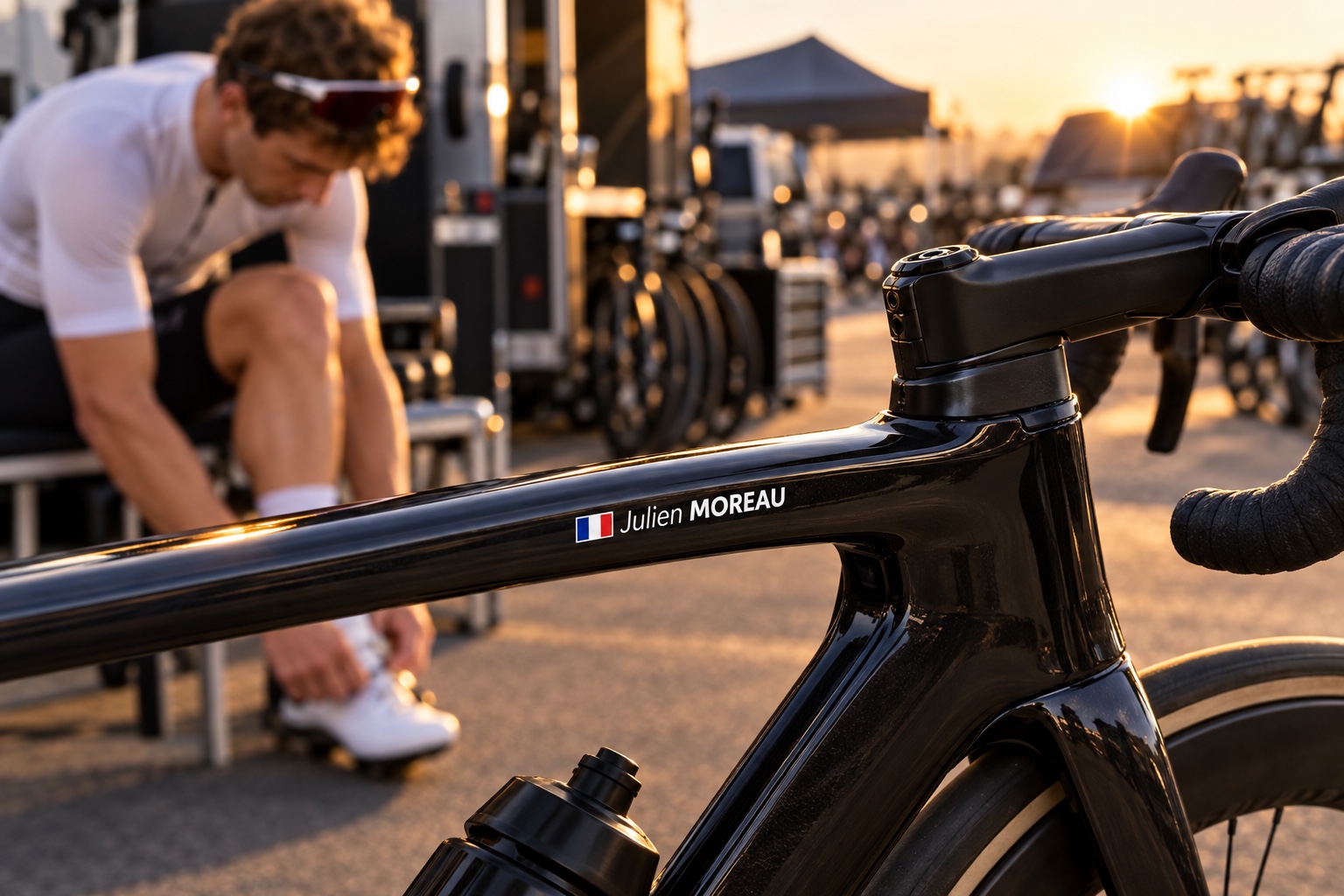
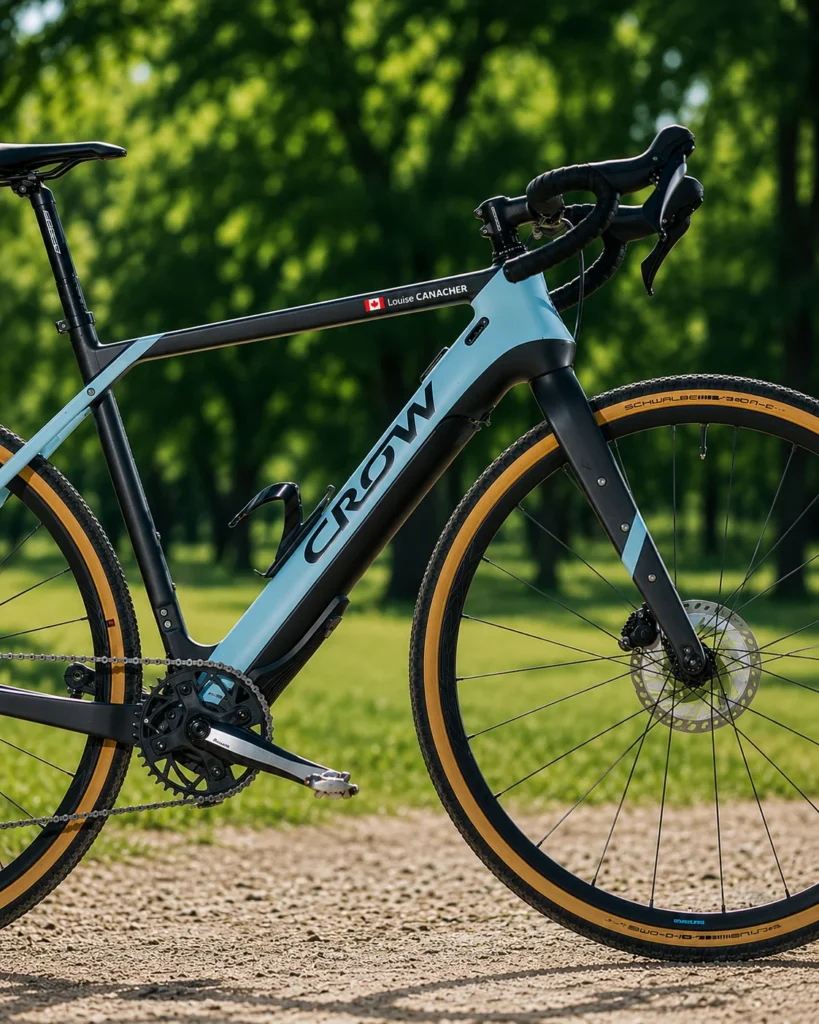
A small personalised name-and-flag sticker is an easy way to give your bike an individual identity.
It also reproduces one of the most recognisable personalised details seen on professional race bikes.
Pegatin creates custom cycling stickers featuring your first name, surname and national or regional flag.
Applied discreetly to the top tube, the sticker becomes part of the bike’s appearance rather than a large decorative graphic.
Discover our guide to bike name stickers or see why professional cyclists put their name and flag on the top tube.
Where to Put Your Name Sticker
The top tube is the classic location for a cyclist’s name-and-flag sticker.
It provides a clean, visible position without dominating the appearance of the bike.
See our guide to bike frame name and flag stickers for more placement ideas.
A helmet is another possibility, provided the helmet manufacturer permits adhesive decals on the specific model.
Our personalised bike helmet sticker guide explains this in more detail.
And before applying anything, follow our bike sticker application and removal guide.
Make your bike easier to identify and give it a clean professional look.

GranFondo Whistler Bike Preparation Checklist
Before heading to Vancouver, check:
- Bike serviced and test ridden afterwards
- Gearing appropriate for sustained climbing
- Brake pads, rotors or braking surfaces checked
- Tyres inspected
- Drivetrain running smoothly
- Electronic shifting batteries charged
- Repair kit prepared
- Nutrition strategy tested
- Bottles and hydration plan ready
- Helmet and shoes checked
- Clothing prepared for changing mountain conditions
- Travel and event arrangements confirmed
- Personalised name-and-flag stickers applied
Gran Fondo, Forte or Medio?
The correct distance depends on your experience and preparation.
Medio offers the most accessible way to experience the event.
The 122 km Gran Fondo provides the classic Vancouver-to-Whistler journey.
And Forte adds significant distance and climbing for riders looking for a substantially harder challenge.
Don’t choose based solely on which number looks most impressive.
Choose the route that allows you to enjoy the experience you’ve travelled to British Columbia to ride.
Final Preparation for GranFondo Whistler
In the final weeks, resist the temptation to make unnecessary changes.
The fitness gains should already have been made.
Check the bike, organise your travel, test your nutrition and arrive rested.
Then enjoy something very few cyclists normally get to experience: riding from Vancouver to Whistler through the Sea-to-Sky corridor as part of one of North America’s great cycling events.
Planning your next big cycling challenge? Explore our cycling events 2027 guide to discover more gran fondos, sportives and endurance rides around the world.
And make the bike carrying you there unmistakably yours.
Personalise your bike for your next event — use code EVENT15 for 15% off
Order personalised stickers with enough time for production and shipping before travelling to the event.