Yes, SRAM is an American bicycle component company. Stan Day and his partners founded SRAM in Chicago, Illinois, in 1987, and the company still keeps its global headquarters in the city.
Quick answer
SRAM is an American bicycle-components company, founded in Chicago in 1987 and still headquartered there. It is privately owned, operates internationally and manufactures or assembles products across several countries rather than exclusively in the United States.
However, describing SRAM as an American company does not mean that every SRAM component is made in the United States. SRAM is now an international manufacturer with engineering, testing, assembly and manufacturing operations in several countries.
In this guide, we explain where SRAM comes from, who makes its components, where SRAM manufactures or assembles them, and how a company that started with a single shifter became one of the most influential brands in cycling.
If you are comparing component ecosystems before upgrading your bicycle, read our complete guide to Shimano, SRAM and Campagnolo bike components.
Is SRAM an American company?
SRAM is an American company. The founders launched SRAM in Chicago in 1987, and the company still runs its global headquarters from Chicago, Illinois.
Interestingly, the founders formed the name SRAM from their own names. The company began with a simple goal: to improve the experience of changing gears on a bicycle.
Its first major product was Grip Shift, a gear-changing system operated by rotating part of the handlebar grip. This was an unusual concept at the time, but its success helped SRAM establish itself in an industry dominated by larger and older component manufacturers.
Today, SRAM develops components for road cycling, mountain biking, gravel, cyclocross and triathlon. Its product range includes drivetrains, electronic shifting systems, brakes, suspension, wheels, power meters, pedals and cycling computers.
Make your bike easier to identify and give it a clean professional look.
Who owns SRAM?
Importantly, SRAM operates as an independent American company and is not owned by Shimano, Campagnolo or a bicycle manufacturer.
This is important because cyclists sometimes assume that the biggest component brands belong to the same corporate group. In reality, SRAM, Shimano and Campagnolo are separate competitors with different histories, technologies and product ecosystems.
Over time, SRAM has expanded both by developing its own products and by acquiring specialist cycling businesses. These acquisitions allowed it to grow beyond gears and create a much broader component portfolio.
Where is SRAM headquartered?
Since its founding, SRAM has kept its global headquarters in Chicago, Illinois, since the company began in 1987.
According to SRAM’s official company page, its Chicago headquarters host much of the senior leadership, engineering and marketing activity.
The company also has facilities and teams in other parts of the United States, Europe, Canada, Australia and Asia. These locations perform different functions, including product development, testing, manufacturing, assembly, sales, servicing and dealer support.
SRAM is therefore American by origin and headquarters, but global in the way it operates.
Where are SRAM components made?
However, SRAM components are not all manufactured in one country.
The place of production depends on the component, brand and product family. SRAM has facilities involved in engineering, testing, manufacturing or assembly in the United States, Portugal, Germany, Taiwan and other locations.
Some of the company’s most important locations include:
Chicago, United States
Chicago is SRAM’s global headquarters. It is home to senior staff and important engineering and marketing functions.
Colorado Springs, United States
SRAM’s Colorado Springs facility is closely associated with RockShox suspension. Brake and suspension development teams also work there, taking advantage of the surrounding terrain for product testing.
Indianapolis, United States
Indianapolis is home to Zipp. SRAM states that its facility there includes the manufacturing of Zipp wheels, as well as office functions supporting SRAM and its brands.
San Luis Obispo, United States
SRAM develops, prototypes and tests products such as chainrings, bottom brackets, cranks and front derailleurs at its San Luis Obispo facility in California.
Coimbra, Portugal
SRAM’s Coimbra facility plays an important role in chain development and manufacturing. The location also has capabilities for assembling TIME pedals and certain Zipp wheels and hubs.
Schweinfurt, Germany
Schweinfurt is SRAM’s largest site in Europe. It is an important development and testing centre for mountain-bike and road drivetrains, as well as a regional service and training location.
Taichung, Taiwan
Taiwan is one of the world’s most important centres for the bicycle industry. In addition, SRAM has engineering and operational facilities in the Taichung area, where its teams develop many individual parts.
For this reason, the most accurate answer is that SRAM is an American company that develops and manufactures products through an international network.
The country shown on an individual component can vary. Cyclists who want to know where a specific part was made should check the markings or packaging supplied with that product.
A brief history of SRAM
Entrepreneurs founded SRAM in 1987, and the company initially built its reputation around Grip Shift.
Instead of using a traditional lever, Grip Shift allowed riders to change gears by twisting part of the handlebar grip. The system gave SRAM a distinctive product and an entry point into the competitive bicycle-component market.
During the following decades, SRAM expanded through a combination of internal product development and acquisitions.
A significant step came in 1997, when SRAM acquired Sachs, a German company with extensive experience in chains and gearing.
Later, SRAM acquired RockShox in 2002, adding one of mountain biking’s most recognisable suspension brands to its portfolio.
Avid, known for braking systems, joined SRAM in 2004. SRAM also acquired Truvativ, which produced cranks, bottom brackets and chainrings. These additions helped SRAM offer a much more complete range of bicycle components.
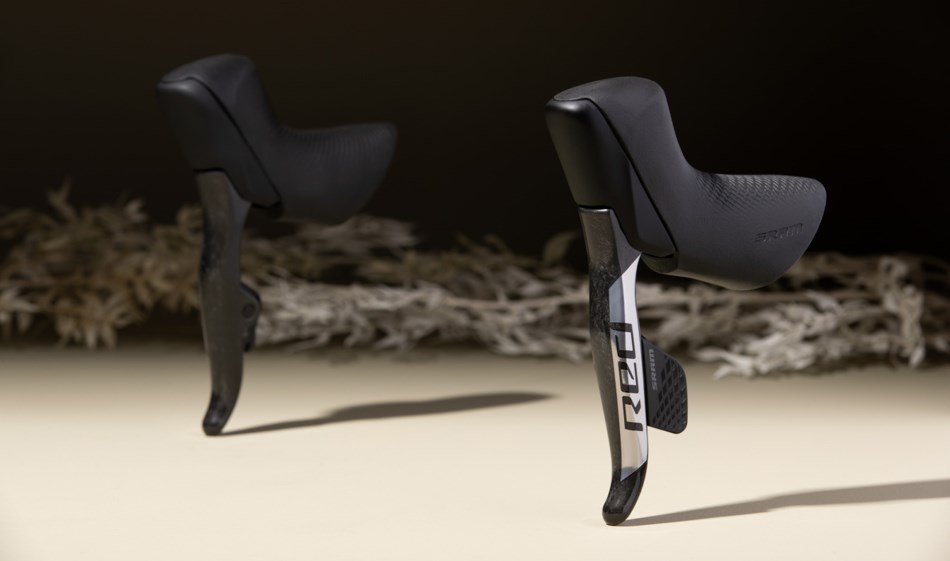
SRAM entered the modern road-groupset market with products such as Force and Rival. It subsequently introduced SRAM RED as its flagship road groupset.
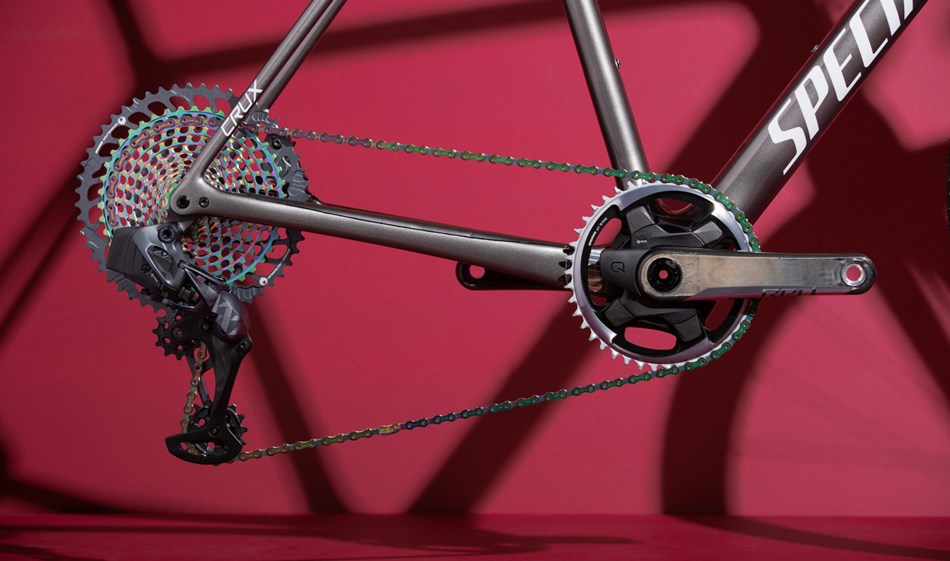
In later years, SRAM became particularly well known for its electronic and wireless AXS ecosystem. AXS connects compatible shifting, drivetrain, suspension and control products and allows riders to customise certain functions digitally.
Which brands belong to SRAM?
SRAM has developed a portfolio covering several areas of cycling. Its principal brands and product families include the following.
RockShox
RockShox specialises in suspension forks, rear shocks, dropper posts and suspension-related components, primarily for mountain bikes.
SRAM acquired RockShox in 2002.
Zipp
Zipp produces performance wheels and components such as handlebars, stems and seatposts. The brand has a strong association with aerodynamics, road racing and triathlon.
Subsequently, SRAM acquired Zipp in 2007.
Quarq
Quarq is best known for power-measurement technology. SRAM acquired it in 2011 and has since integrated its technology into several products and groupsets.
TIME pedals
More recently, SRAM acquired TIME Sport’s pedal business in 2021. The range includes road and mountain-bike pedals and cleats.
This acquisition concerned TIME’s pedal products, not every business historically associated with the TIME name.
Hammerhead
Hammerhead produces Karoo cycling computers. SRAM completed its acquisition of Hammerhead at the end of 2021, adding navigation and digital ride technology to its portfolio.
Truvativ and Avid
Truvativ and Avid have played important roles in SRAM’s development. Truvativ focuses on cranks, chainrings and cockpit components, while riders know Avid for its braking products.
Some of their technologies and product names now appear within SRAM’s wider component range.
What does SRAM manufacture?
SRAM and its associated brands cover a large part of a modern bicycle’s component system.
Their products include:
- Mechanical and electronic drivetrains
- Rear and front derailleurs
- Shifters and controllers
- Cassettes and chains
- Cranks and chainrings
- Hydraulic disc brakes
- Suspension forks and rear shocks
- Dropper posts
- Road, gravel and mountain-bike wheels
- Power meters
- Road and mountain-bike pedals
- Cycling computers
Importantly, SRAM does not manufacture complete bicycles. Instead, many bicycle brands fit its components at the factory, and riders also buy them separately as upgrades.
SRAM AXS and wireless shifting
One of SRAM’s most distinctive modern technologies is AXS.
AXS is SRAM’s electronic ecosystem for compatible bicycle components. Depending on the bicycle and setup, it can connect electronic shifters, derailleurs, dropper posts and suspension controls.
In particular, SRAM has promoted wireless shifting especially strongly in road, gravel and mountain biking. Removing the physical cable between the shifter and derailleur can simplify installation and allow greater freedom in the position and configuration of controls.
The AXS application also allows riders to customise certain controls, check battery status and install compatible firmware updates.
Not every SRAM component uses AXS. The company continues to offer products at different price levels, including mechanical drivetrains.
SRAM vs Shimano and Campagnolo
For comparison, SRAM, Shimano and Campagnolo are three of the best-known names in bicycle components, but they are independent companies.
Shimano is a Japanese company with an extensive range covering recreational, road and mountain biking. It also has a very large global distribution and servicing network.
Campagnolo is an Italian company historically associated with road racing and premium road components.
SRAM is an American company and is particularly associated with wireless AXS shifting, wide-range drivetrains, single-chainring systems and its collection of specialist brands such as RockShox and Zipp.
None of these brands is automatically the best choice for every rider.
The right option depends on:
- The type of bicycle
- The intended use
- The rider’s preferred shifting system
- Local availability of parts
- Compatibility with existing components
- Maintenance requirements
- Budget
Whatever component system you choose, small personalised details can make the finished bike unmistakably yours. Pegatin creates custom name and flag stickers for bicycle frames, designed to add a professional finishing touch without changing the bike’s components.
When replacing or upgrading a component, compatibility is more important than brand reputation alone.
Is SRAM a good brand?
Today, SRAM is one of the leading component manufacturers in modern cycling. Recreational riders, racers and professional athletes use its products across many types of bicycles.
As with any manufacturer, performance and features vary between product levels. Therefore, do not compare an entry-level component directly with a flagship model simply because both carry the same brand name.
Before buying, cyclists should compare the exact groupset or component, its compatibility, replacement-part availability and servicing requirements.
Frequently asked questions about SRAM
What country is SRAM from?
SRAM is from the United States. Stan Day and his partners founded it in Chicago, Illinois, in 1987, and the company maintains its global headquarters there.
Is SRAM made in the USA?
Some SRAM-related products and manufacturing activities take place in the United States, but not every SRAM component is made there. SRAM uses an international network of development, manufacturing and assembly facilities.
Where is SRAM manufactured?
The location depends on the product. SRAM has facilities connected with engineering, manufacturing or assembly in countries including the United States, Portugal, Germany and Taiwan.
Who makes SRAM components?
SRAM and its international production network make SRAM components. Specialised facilities develop or manufacture certain products according to their product family.
Is SRAM owned by Shimano?
No. SRAM and Shimano are separate competing companies. SRAM is American, while Shimano is Japanese.
Is RockShox owned by SRAM?
Yes. SRAM acquired RockShox in 2002. RockShox now forms the suspension-focused part of SRAM’s brand portfolio.
Is Zipp owned by SRAM?
Yes. SRAM acquired Zipp in 2007. Zipp continues to specialise in performance wheels and other road and triathlon components.
Does SRAM own TIME?
SRAM acquired TIME Sport’s road and mountain-bike pedal business, including pedals, cleats and related patents. However, do not confuse this acquisition with ownership of every business or product that has historically carried the TIME name.
What was SRAM’s first product?
SRAM’s first product was Grip Shift, a twist-operated shifting system. Its success helped the company establish itself in the bicycle-component industry.
Conclusion
SRAM is an American bicycle component company founded and headquartered in Chicago. Nevertheless, it has become a global manufacturer, with different products developed, tested, assembled and manufactured in several countries.
From its beginnings with Grip Shift, SRAM has grown into a broad cycling group encompassing drivetrains, brakes, suspension, wheels, power meters, pedals and cycling computers.
Its expansion through brands such as RockShox, Zipp, Quarq, TIME pedals and Hammerhead has made SRAM one of the most important competitors in the global bicycle-component market.
For cyclists, the decisive question is not simply whether SRAM is American or where a component was made. It is whether the specific component suits the bicycle, is compatible with the rest of the system and provides the performance, maintenance and availability the rider needs.
Personalise your bike with Pegatin
Give Your Bike the PRO Finishing Touch
Components such as SRAM can completely change the performance and character of a bike. But one of the smallest details can also make it unmistakably yours: your name and national flag on the frame. It’s a subtle finishing touch inspired by professional race bikes and works with any bike or component setup.
A new groupset can transform how a bicycle performs. A personalised sticker can transform how it looks.
Create your own name and flag design for your road, gravel, mountain or triathlon bike. Pegatin’s custom bicycle stickers are made to give your frame a clean, professional and personal finish.
Upgrading components is only part of a clean build. If you also want clear rider identification, explore our custom bike decals guide for personalised name-and-flag options.
Add your name and flag to your bike
Save 15% with code PRODECALS. Free worldwide shipping.
Create your Pegatin